ElevenLabs pricing looks simple at first glance, a free plan and a few paid tiers, until you actually try to estimate what a real project will cost you. The credit system tied to character count means two people paying the exact same subscription can run out of usage at very different points, depending on which model and feature they lean on. This breakdown covers every current plan, exactly how credits actually work, and where the real costs tend to hide.
Table of Contents
What Is ElevenLabs Pricing?
ElevenLabs pricing is structured around six main tiers, Free, Starter, Creator, Pro, Scale, and Business, with a separate custom Enterprise option for larger organizations. Unlike a flat subscription that gives every paying user identical access, ElevenLabs gates specific features, commercial rights, Professional Voice Cloning, the Dubbing Studio, behind specific tiers rather than making everything available to anyone who pays something.
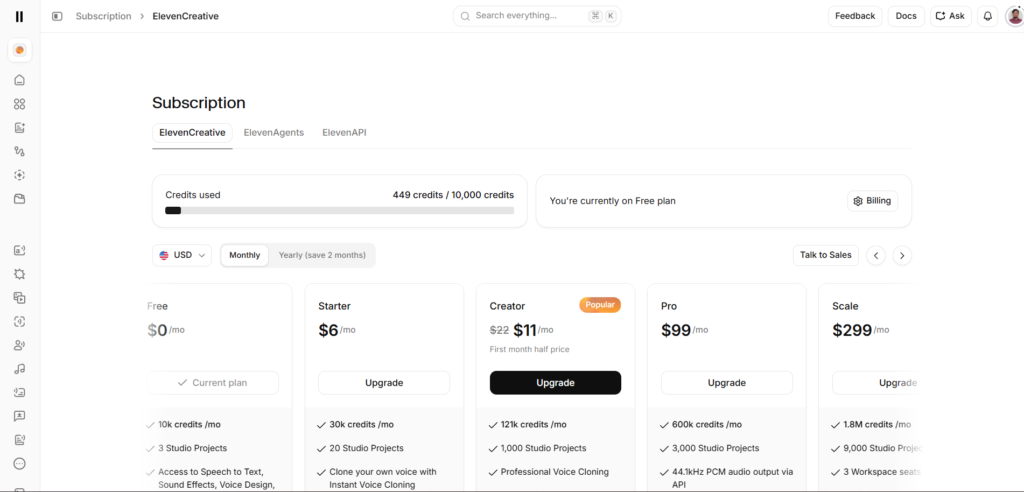
The Free plan includes 10,000 credits monthly, translating to roughly ten minutes of high quality text-to-speech using the Multilingual V2 model, or approximately fifteen minutes of Conversational AI agent time. Free users can create up to three custom voices, but cannot use generated audio commercially, and any published audio requires attribution to ElevenLabs, a restriction worth understanding clearly before assuming free tier output is ready to publish anywhere monetized.
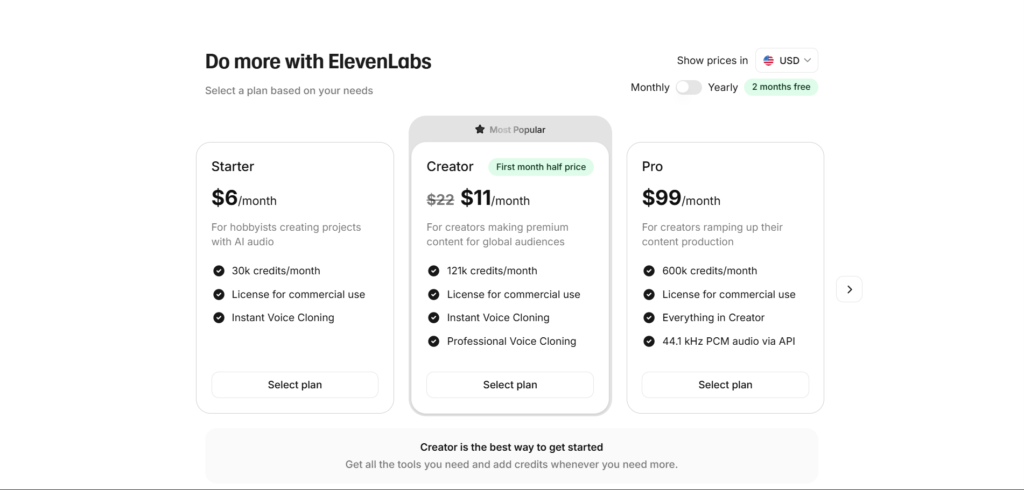
Starter, priced around $5 a month, is the first tier to unlock commercial usage rights and Instant Voice Cloning, making it the realistic entry point for anyone planning to actually publish AI generated audio rather than just testing the platform. Independent reviewers at Top50AITools’ pricing breakdown note this as the plan most creators land on when transitioning from testing to actual publishing. Creator, at $22 a month and marked as the most popular tier on ElevenLabs’ own official pricing page, adds Professional Voice Cloning and the Dubbing Studio, the two features most serious creators are actually paying for.
Pro, at $99 a month, targets developers needing more API headroom and higher quality audio output for production use. Scale at $299 and Business at $990 monthly serve progressively higher volume workloads, with Business delivering several million credits monthly for agencies and larger product teams, figures corroborated by Smallest.ai’s independent 2026 pricing comparison of the full ElevenLabs tier structure. All paid plans offer annual billing at roughly 17 percent savings, and unused credits roll over for up to two months rather than disappearing at the end of each billing cycle, a detail confirmed in independent pricing analysis from BIGVU’s 2026 breakdown.
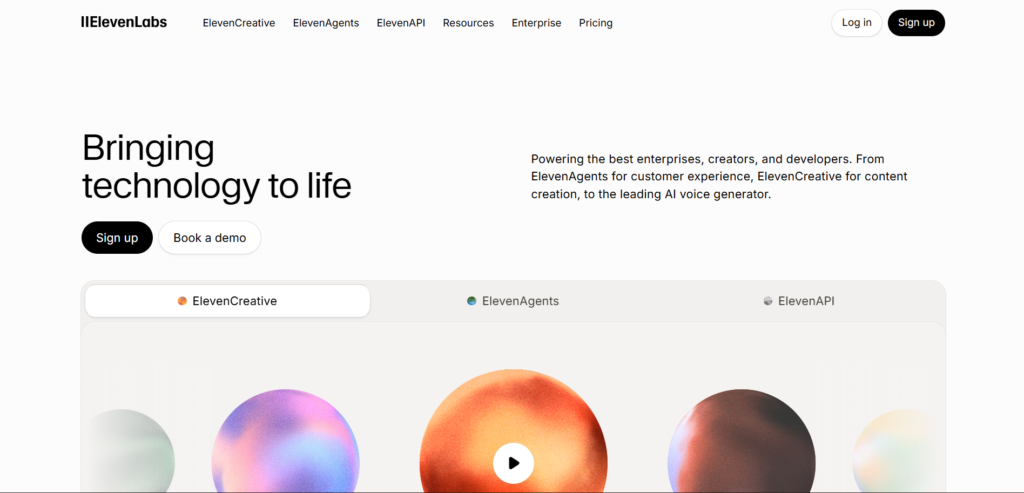
If you have not yet read our full ElevenLabs review, it is worth understanding the broader product lineup before diving into pricing specifics, since which tier makes sense depends heavily on which of ElevenLabs’ three product lines, creative tools, conversational agents, or the developer API, you actually plan to use.
How ElevenLabs Pricing Works?
Understanding ElevenLabs pricing requires grasping the credit system first, since it is fundamentally different from a simple usage cap or a flat per-generation fee. Credits map directly to characters of text processed, with one credit generally equaling one character under the standard Multilingual V2 model, though this ratio shifts depending on which model you actually use for a given generation.
Model Choice Directly Affects Your Real Cost
ElevenLabs offers two primary text-to-speech models with meaningfully different credit costs. The Flash model, built for sub-second latency in real-time applications, uses credits more efficiently for its intended use case but sacrifices some audio quality compared to Multilingual V2. According to Flexprice’s detailed breakdown of ElevenLabs’ pricing evolution, the Flash model’s character limit runs roughly double that of the free tier’s Multilingual allowance, meaning your effective usage capacity genuinely depends on which model you choose for a given task rather than being fixed by your plan tier alone.
Conversational AI Has Its Own Cost Structure
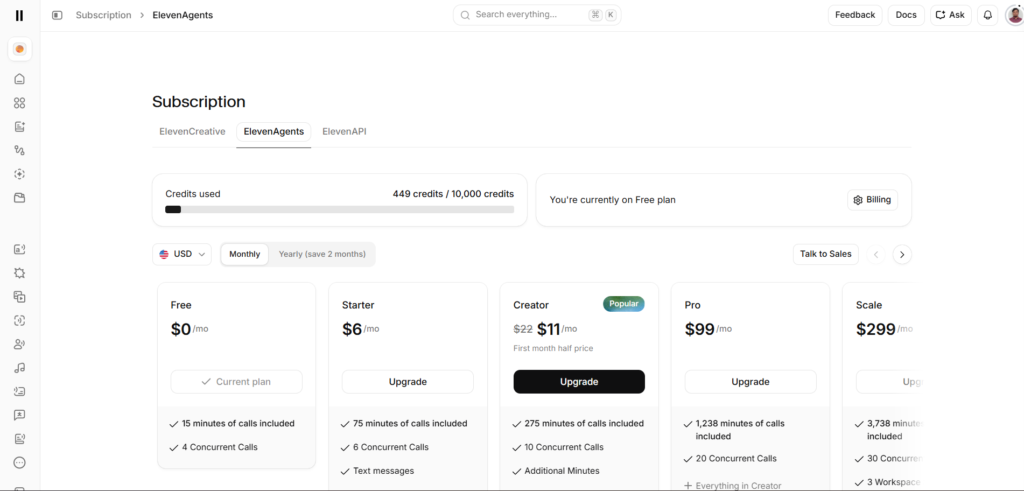
ElevenAgents, the conversational AI product, is billed differently from standard text-to-speech, generally measured in call minutes rather than characters. Each plan includes a set number of included minutes and a concurrent call limit, with overage billed separately once you exceed your included allowance. According to CloudTalk’s 2026 guide to ElevenLabs pricing for AI calling, additional calls beyond your included minutes are billed at $0.08 per minute, with burst pricing of $0.16 per minute applying if you exceed your concurrent call limit during a usage spike. This cost structure matters significantly more for businesses specifically deploying conversational AI agents than for individual creators using text-to-speech alone.
What the Subscription Price Does Not Include?
A subscription to ElevenLabs covers the ElevenLabs technology itself, but businesses building full conversational AI calling systems still need their own telephony provider and, in some configurations, their own connected LLM, both billed entirely separately from ElevenLabs’ own pricing. This distinction catches some businesses off guard when estimating total project cost, a gap Anthropic’s own documentation on building with Claude’s API illustrates from the LLM side of a similar stack, since combining a voice layer with a separate language model provider means tracking at least two distinct billing relationships rather than one.
API Pricing Follows a Related but Distinct Structure
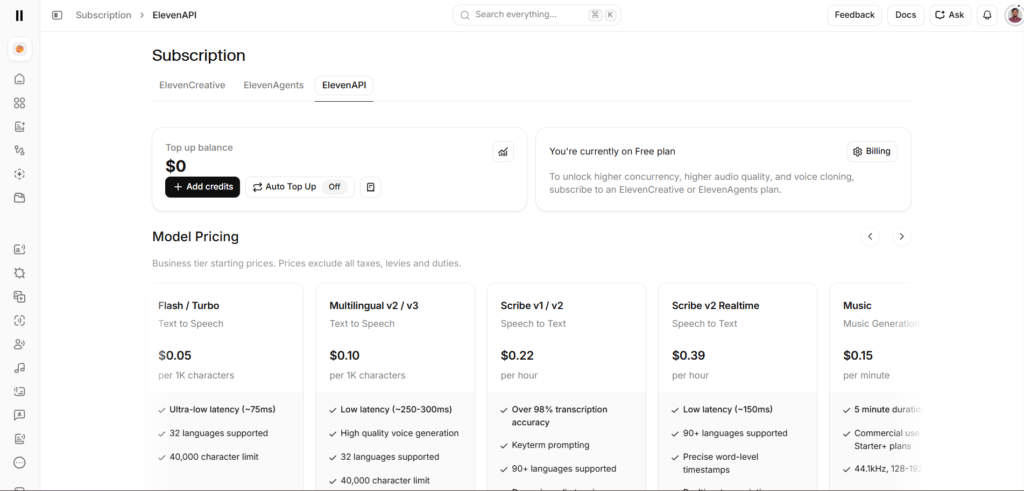
Developers integrating ElevenLabs directly into their own products through the ElevenAPI developer layer generally pay based on the same underlying credit and character logic as the consumer plans, but at volume, with custom enterprise agreements available for very high usage. Anyone planning a production API integration should validate real cost per character against their expected usage volume before committing engineering resources to the integration.
Managing ElevenLabs Spend Across a Team
Larger teams issuing ElevenLabs access to multiple employees, editors, or contractors face a separate practical challenge worth planning for: controlling who has access to which tier and preventing accidental overages or unauthorized upgrades. According to PhotonPay’s guide on managing SaaS spending for AI tools, some finance teams solve this by issuing virtual payment cards with hard spending caps matched exactly to a specific employee’s assigned plan tier, giving real-time visibility into where AI tool spending is actually going across an organization.
Step-by-Step Guide to Choosing Your ElevenLabs Plan
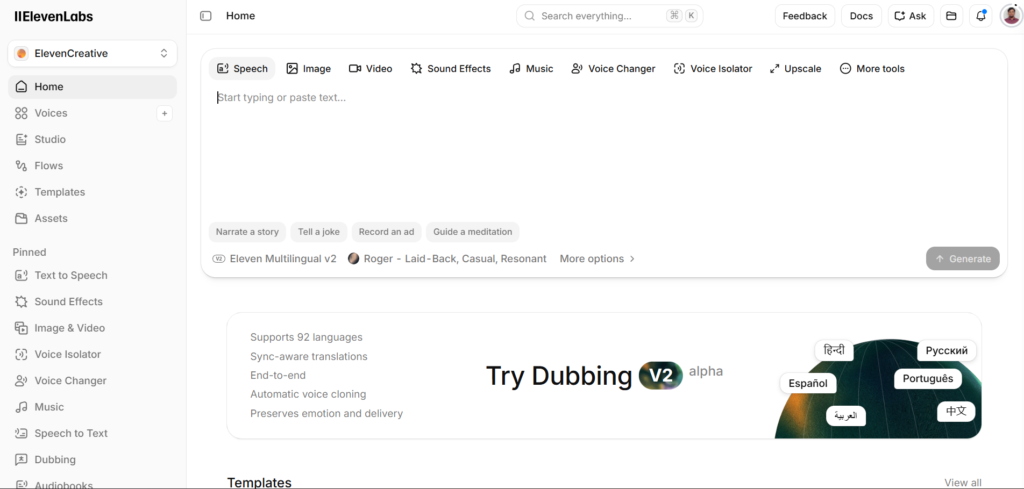
Here is how to actually estimate your real usage and pick the right tier rather than guessing based on the headline monthly price alone.
Step 1: Estimate Your Actual Monthly Character Volume
Before choosing a plan, calculate roughly how many characters of text you actually need converted to speech in a typical month. A single YouTube video script might run 3,000 to 5,000 characters, while a full audiobook chapter can easily exceed 20,000, numbers worth having in hand before comparing tiers.
Step 2: Start on the Free Plan to Test Voice Quality
Use the free plan’s 10,000 monthly credits specifically to test voice quality and workflow before committing financially. Since free tier audio cannot be used commercially, treat this stage purely as evaluation rather than production work.
Step 3: Move to Starter Once You Need to Publish Commercially
The moment you plan to publish AI generated audio in any monetized or commercial context, upgrade to at least Starter for commercial rights and Instant Voice Cloning. Staying on free tier while publishing commercially violates ElevenLabs’ terms of service, a risk not worth taking for the relatively small cost difference.
Step 4: Upgrade to Creator If You Need Professional Cloning or Dubbing
If your work specifically requires Professional Voice Cloning’s higher fidelity or the Dubbing Studio for multilingual content, Creator at $22 monthly is the tier where both features actually unlock. Confirm you genuinely need these specific features before paying for them, since Starter covers basic commercial use at a lower cost.
Step 5: Consider Pro Only With a Real Development Need
Pro’s higher API headroom and audio quality benefits are specifically aimed at developers building production applications, not casual creators. If you are not actively building or integrating with the API, Creator likely covers your needs at a meaningfully lower monthly cost.
Step 6: Evaluate Annual Billing Once Your Usage Stabilizes
Once you have used a specific tier consistently for a month or two and know it fits your needs, switching to annual billing saves roughly 17 percent. Avoid committing to annual billing before you are confident in your actual ongoing usage pattern, since early cancellation typically does not include a partial refund.
Step 7: Monitor Credit Rollover Rather Than Losing Unused Credits
Since unused credits roll over for up to two months on paid plans, track your usage across a full quarter rather than assuming any single light month was wasted spend. This rolling window gives more flexibility than a strict monthly reset, particularly for project-based, inconsistent workloads.
Key Benefits of Understanding ElevenLabs Pricing
Knowing exactly how the credit system maps to real usage prevents the most common budgeting mistake, assuming a plan’s headline character allowance translates directly into finished content length without accounting for which specific model you are using for a given task. This single misunderstanding is responsible for more surprise overages than any other pricing quirk on the platform.
Understanding that conversational AI billing works fundamentally differently from standard text-to-speech, measured in call minutes rather than characters, prevents businesses from budgeting for ElevenAgents deployments using the wrong cost model entirely, a mistake that can significantly understate real projected spend for a calling-heavy application.
The credit rollover policy genuinely benefits creators and businesses with inconsistent, project-based output rather than a perfectly steady monthly volume. Knowing this rollover exists changes how conservatively you need to estimate your tier, since an occasional lighter month does not simply waste unused capacity the way a strict use-it-or-lose-it system would.
Recognizing that a subscription price alone does not cover telephony or LLM costs for conversational AI deployments prevents businesses from significantly underestimating the full cost of a production calling system, a gap that industry buyers frequently flag when comparing voice AI platform costs through G2’s software review database as one of the most commonly missed cost components in real deployment budgets.
Understanding the two-model system’s real cost implications also helps teams avoid a subtle but common inefficiency: defaulting to the higher quality, higher cost Multilingual V2 model for every single generation, including early drafts that will be revised or discarded anyway. Reserving Flash for iteration and Multilingual V2 for final renders, a workflow the platform itself recommends, meaningfully stretches a given credit allowance further across a typical project.
Comparison Table
| Tool Name | Entry Paid Tier | Billing Unit | Commercial Rights Start | Monthly Cost |
|---|---|---|---|---|
| ElevenLabs | Starter | Character-based credits | Starter tier | Free, then $5 |
| Murf AI | Creator | Minute-based usage | Entry paid tier | Free, then $29 |
| Play.ht | Creator | Character-based credits | Entry paid tier | Free, then $39 |
| Resemble AI | Custom | Usage-based, API-first | Custom agreement | Custom pricing |
| Amazon Polly | Pay-as-you-go | Character-based, no subscription | Included from first use | Usage-based |
Pricing reflects publicly listed rates as of mid-2026, cross-referenced against figures reported by CostBench’s independent pricing tracker, which notes that real-world buyers report a median annual contract cost around $500 based on verified purchase data. Voice AI pricing structures vary meaningfully by billing method, so compare based on your actual expected monthly volume rather than the headline number alone.
Who Each ElevenLabs Pricing Plan Is For?
The Free plan fits anyone testing ElevenLabs for the first time or evaluating voice quality before committing financially, but is not appropriate for any commercial or monetized publishing due to the licensing restriction and required attribution.
Starter fits solo creators and small YouTubers just beginning to monetize, where the relatively low $5 monthly cost unlocks commercial rights without requiring the higher investment of Creator’s additional features. Creators specifically producing regular video content often start here before scaling up once volume or feature needs grow.
Creator fits regular content producers, podcasters, and small production teams who need Professional Voice Cloning or the Dubbing Studio as core parts of their workflow, representing the tier where ElevenLabs’ most distinctive features actually become available.
Pro and above fit developers and businesses building production applications, whether that is a high volume audiobook publishing operation, a business deploying conversational AI phone agents at scale, or a company integrating voice generation directly into their own product through the API.
FAQ
How much does ElevenLabs cost for a beginner?
Beginners can start entirely free with 10,000 monthly credits, roughly ten minutes of text-to-speech, though this tier cannot be used for any commercial or monetized content. Once ready to publish commercially, Starter at approximately $5 a month is the realistic entry point, unlocking commercial rights and Instant Voice Cloning at the lowest available paid cost. Most beginners can comfortably start and test the platform on Starter before deciding whether Creator’s additional features justify the higher monthly cost for their specific use case.
What is included in the ElevenLabs Creator plan?
The Creator plan, priced at $22 monthly and marked as ElevenLabs’ most popular tier, includes 100,000 to 121,000 credits depending on the specific source consulted, along with Professional Voice Cloning and access to the Dubbing Studio for multilingual content. This is the first tier where Professional Voice Cloning becomes available, distinct from the faster but less refined Instant Voice Cloning available on Starter. For creators whose work depends specifically on either of these two features, Creator represents the practical minimum tier needed, and most regular content producers find its credit allowance comfortably covers a typical month of ongoing production work.
Does ElevenLabs charge extra for conversational AI or calling features?
Yes, ElevenAgents, the conversational AI calling product, is billed using a different unit than standard text-to-speech, measured in call minutes and concurrent call limits rather than characters. Each plan includes a set number of minutes, with overage billed at $0.08 per minute and burst pricing of $0.16 per minute if concurrent call limits are exceeded during a usage spike. Businesses should budget separately for telephony and any connected LLM costs as well, since these are not included in the ElevenLabs subscription price itself, meaning a full calling deployment typically involves at least two or three separate vendor relationships rather than one all-inclusive bill.
Do unused ElevenLabs credits roll over each month?
Yes, on paid plans, unused credits roll over for up to two months rather than resetting to zero at the end of each billing cycle, though they do not accumulate indefinitely beyond that window. This gives subscribers more practical flexibility for project-based or inconsistent monthly output compared to a strict use-it-or-lose-it system. The free plan’s credit rollover policy may differ from paid tiers, so confirm current terms directly on ElevenLabs’ pricing page before assuming identical rollover behavior across every tier.
Is ElevenLabs cheaper than Amazon Polly or Google Cloud Text-to-Speech?
At very high volume for simple, non-creative text-to-speech needs, Amazon Polly’s pay-as-you-go pricing can work out cheaper than ElevenLabs’ subscription tiers, particularly for businesses already embedded in AWS infrastructure. However, ElevenLabs generally delivers noticeably higher audio quality and features like voice cloning and dubbing that Polly does not offer at a comparable level. The right comparison depends on whether your priority is minimizing cost at massive scale for basic announcements, which favors Polly, or maximizing voice quality and creative flexibility, which favors ElevenLabs.
What happens if I exceed my ElevenLabs credit limit?
Exceeding your plan’s included credit limit typically results in your account being temporarily unable to generate further audio until the next billing cycle resets your allowance, though specific overage handling can vary by plan and whether you have enabled any available overage billing options. For predictable, high volume needs, upgrading to a higher tier before consistently hitting your limit is generally more cost effective than relying on ad hoc overage charges, which tend to carry a less favorable per-unit rate than your plan’s included allowance.
Final Thoughts
ElevenLabs pricing rewards anyone who takes a few minutes to actually understand the credit system before committing to a tier. The character-based billing, the meaningful cost differences between the Flash and Multilingual V2 models, and the entirely separate cost structure for conversational AI all mean the headline monthly price tells you far less than it initially appears to about your real expected cost.
The most common mistake is assuming a plan’s stated credit allowance directly translates into a predictable amount of finished content without accounting for which model or feature you are actually using. Taking the time to estimate real character volume before choosing a tier, covered in the step-by-step section above, prevents both overpaying for unused capacity and the frustration of hitting a limit mid-project.
Businesses evaluating conversational AI specifically should treat the ElevenLabs subscription as one line item in a larger budget rather than the full cost of a deployed system, since telephony and any connected language model provider both add to the real total. This is easy to overlook when comparing headline subscription prices in isolation, but it becomes obvious the moment an actual deployment budget gets built out in full.
Start on Starter if you know you need commercial rights, test your real monthly volume for a billing cycle or two, and only move up to Creator or Pro once you have confirmed you actually need the specific features those tiers unlock.