ElevenLabs Conversational AI has moved well past the novelty phase, now handling real customer service calls, appointment scheduling, and sales qualification for businesses that would have needed a full call center team to manage the same volume just a couple of years ago. This guide covers how the technology actually works, what makes it different from the text-to-speech product most people first associate with ElevenLabs, and the honest tradeoffs businesses should understand before deploying it.
Table of Contents
What Is ElevenLabs Conversational AI?
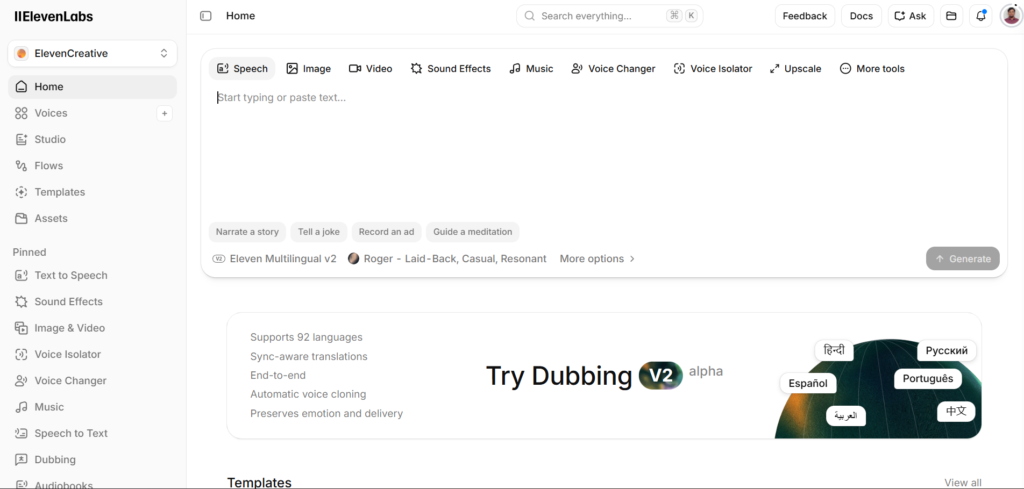
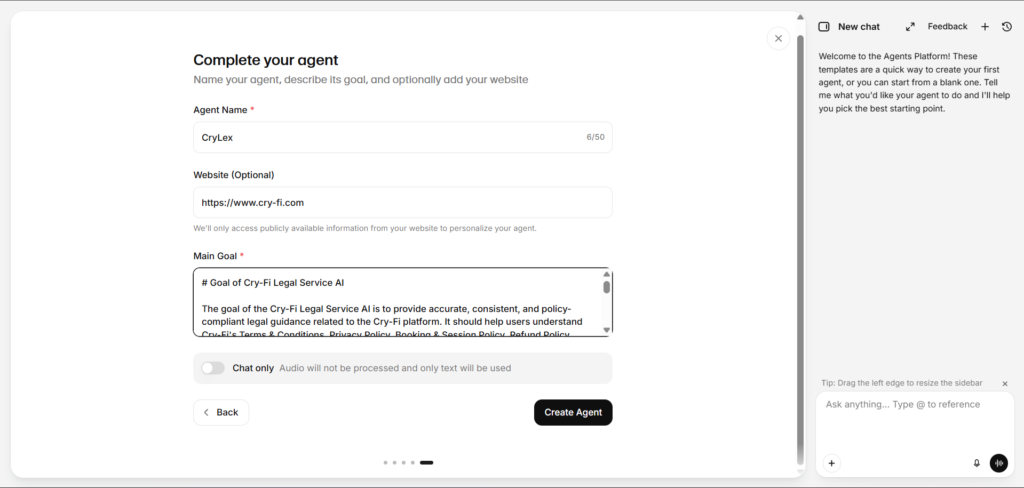
ElevenLabs Conversational AI, sometimes called ElevenAgents, is a platform for building real-time voice agents capable of holding natural, back-and-forth phone conversations rather than simply reading pre-written text aloud. Unlike standard text-to-speech, which converts a fixed script into audio, conversational agents listen, understand intent, retrieve relevant information from a connected knowledge base, and respond dynamically within a live conversation.
This represents a meaningfully more complex product than ElevenLabs’ original text-to-speech offering, since it requires several distinct capabilities working together in real time: speech recognition to understand what a caller is saying, a connected language model to determine an appropriate response, and low-latency voice generation to deliver that response back without the noticeable delay that would break the natural feel of a conversation. For the full picture of how this fits alongside ElevenLabs’ other products, our ElevenLabs Review 2026: 9 Honest Truths About the AI Voice Tool Everyone’s Cloning covers the complete platform.
Businesses deploy these agents primarily for phone-based customer service, appointment scheduling, order status inquiries, and initial sales qualification, use cases that share a common structure: a defined set of likely questions or tasks, a need for consistent availability, and enough call volume that staffing the equivalent work with human agents around the clock becomes genuinely expensive.
How This Differs From a Simple Phone Tree?
It is worth distinguishing conversational AI clearly from older automated phone systems most callers are already familiar with, the “press 1 for sales, press 2 for support” style interactive voice response systems that have existed for decades. Those older systems work through rigid, predefined menu trees, forcing callers to navigate a fixed structure regardless of what they actually need.
Conversational AI agents instead understand natural spoken language directly, letting a caller simply state their actual need rather than navigating a menu tree to find the closest matching option. This distinction matters enormously for caller experience, since natural language interaction feels dramatically less frustrating than being forced through a rigid, often poorly matched menu structure that older phone systems typically require.
How ElevenLabs Conversational AI Actually Works?
Understanding the technical pieces that make a conversational agent function helps clarify both its genuine capabilities and its real limitations compared to a human agent handling the same calls.
The Three-Part Real-Time Pipeline
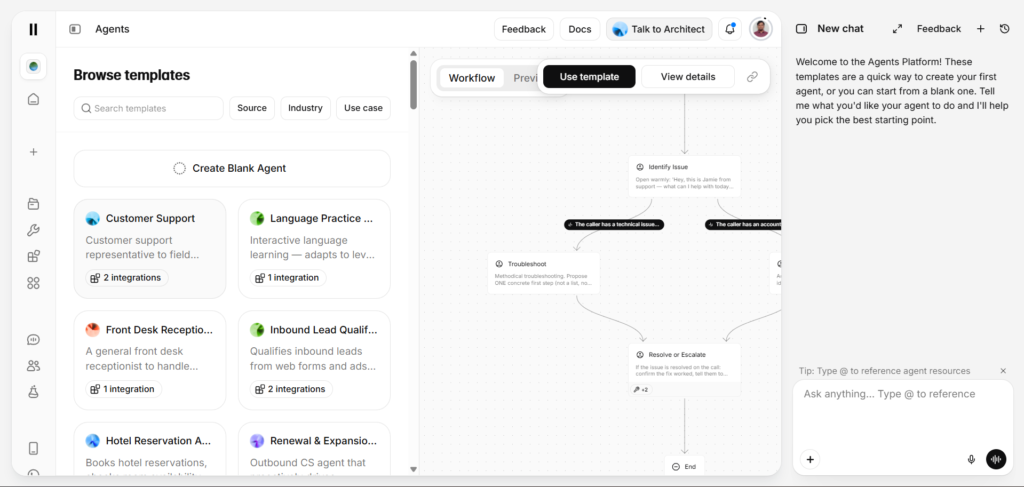
A functioning conversational agent requires three components working together with minimal delay. Speech-to-text converts the caller’s spoken words into text the system can process. A connected large language model interprets that text, determines intent, and formulates an appropriate response, often by referencing a connected knowledge base specific to the business deploying the agent. Text-to-speech, using ElevenLabs’ Flash model specifically for its low-latency characteristics, converts that response back into natural sounding spoken audio delivered to the caller.
Latency Is the Defining Technical Challenge
Every additional fraction of a second of delay between a caller finishing a sentence and the agent beginning its response makes the interaction feel less natural and more obviously automated. This is why the Flash model, rather than the higher quality but slower Multilingual V2 model typically used for pre-recorded content, is the standard choice for conversational applications specifically, prioritizing response speed over the marginal quality improvement Multilingual V2 would otherwise offer.
Knowledge Base Integration
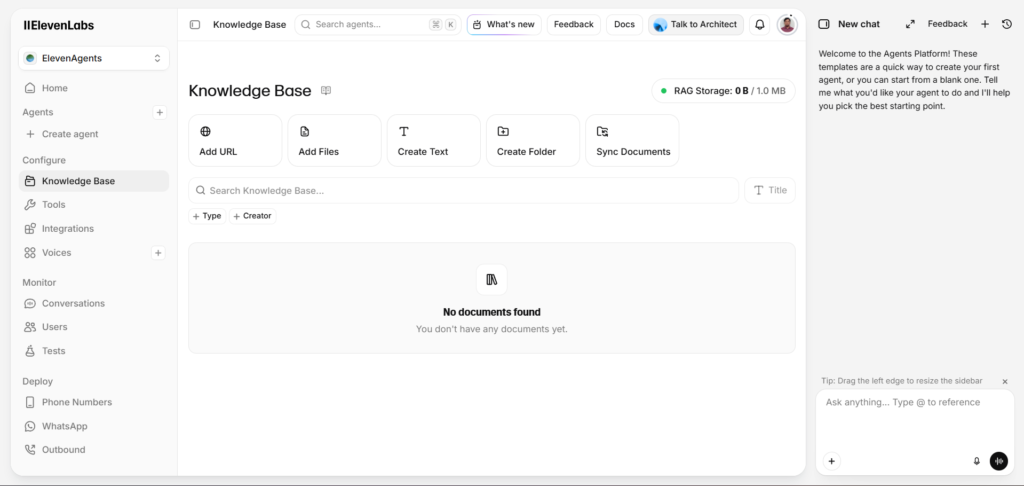
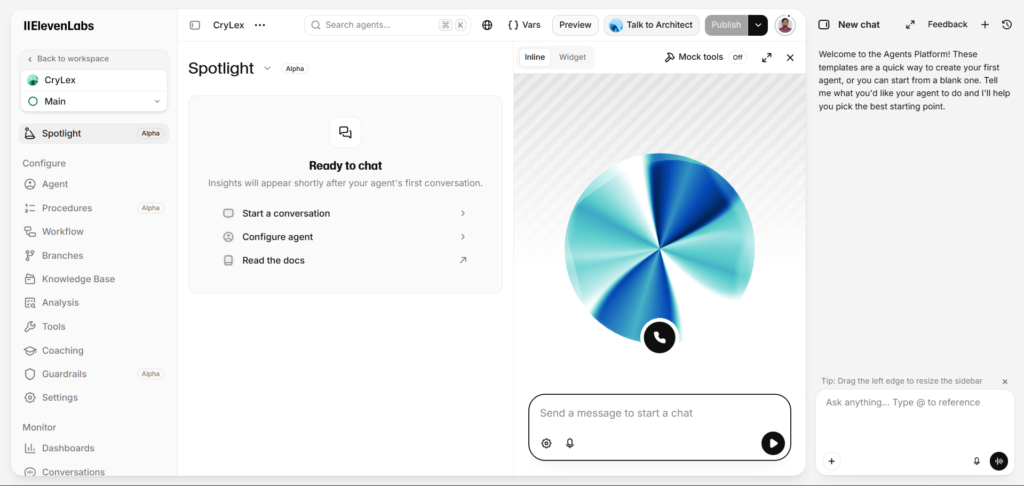
Conversational agents become genuinely useful for business applications specifically through their connection to a knowledge base containing information relevant to the deploying business, product details, policies, scheduling availability, or order information. Without this connection, an agent can hold a natural sounding conversation but cannot actually answer business-specific questions accurately, making knowledge base setup one of the more consequential parts of a real deployment rather than an optional add-on.
Call Handling and Handoff to Humans
Well-designed conversational agent deployments include clear pathways for escalating to a human agent when a call falls outside the agent’s defined scope or a caller specifically requests human assistance. This handoff design matters significantly for customer experience, since forcing a caller to repeat themselves to a frustrated human agent after a failed automated interaction produces a worse overall experience than either a smooth automated resolution or a clean, early handoff to a human.
The best deployments treat the handoff moment itself as a design problem worth genuine attention, passing along whatever context the agent already gathered so a human picking up the call does not need the caller to repeat information already provided. Skipping this step, even when the underlying escalation logic works correctly, undermines much of the goodwill a smooth automated interaction would otherwise build with a caller.
Step-by-Step Guide to Deploying ElevenLabs Conversational AI
Here is a practical path to deploying a conversational agent for a real business use case rather than a generic demo.
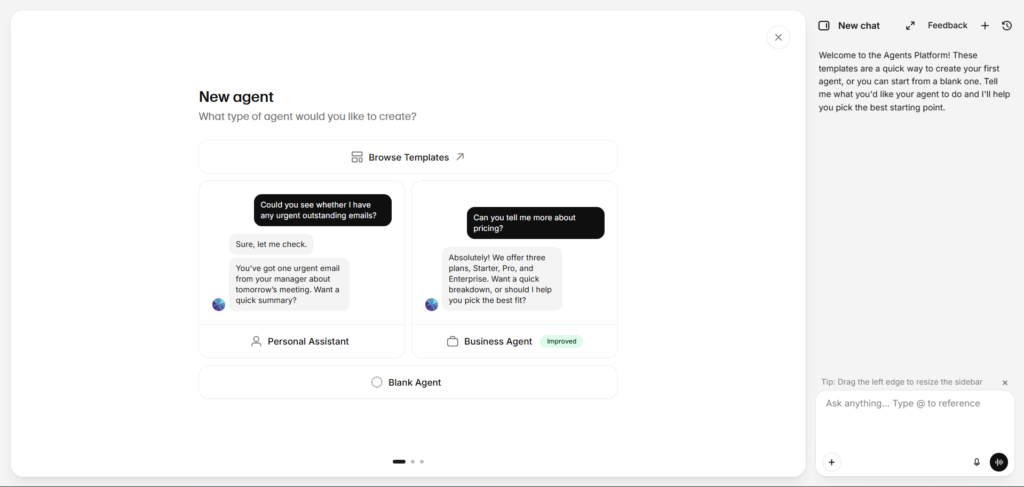
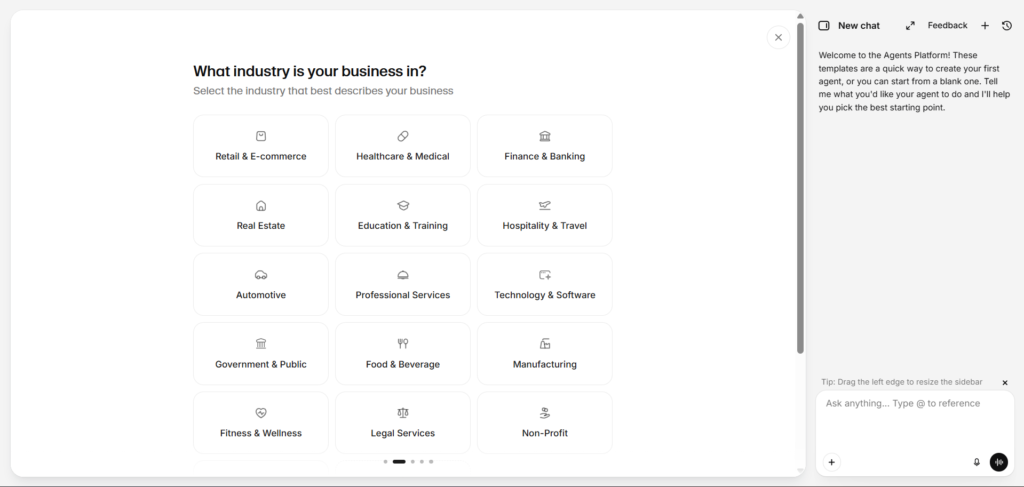
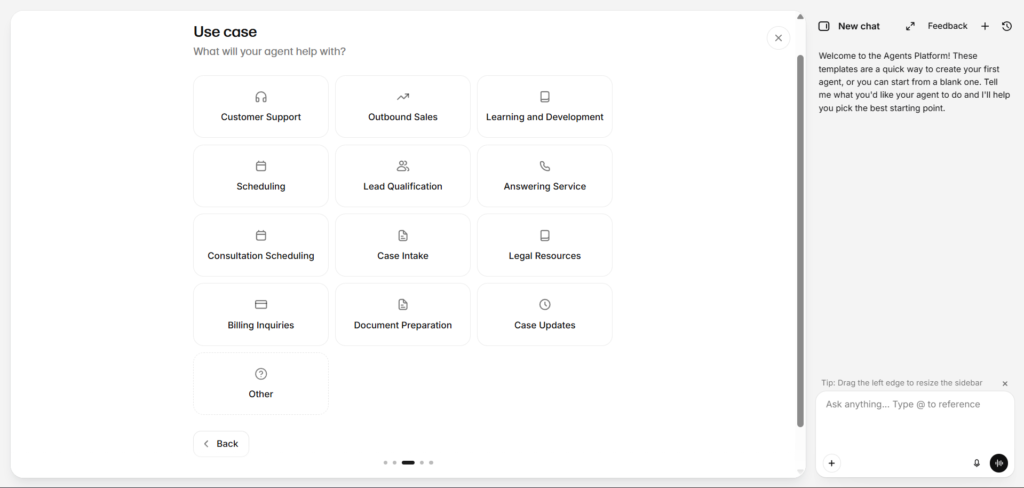
Step 1: Define a Narrow, Well-Bounded Use Case First
Rather than attempting to automate all customer service interactions at once, start with a specific, well-defined use case, appointment scheduling or basic order status checks, for example, where the range of likely questions is genuinely predictable.
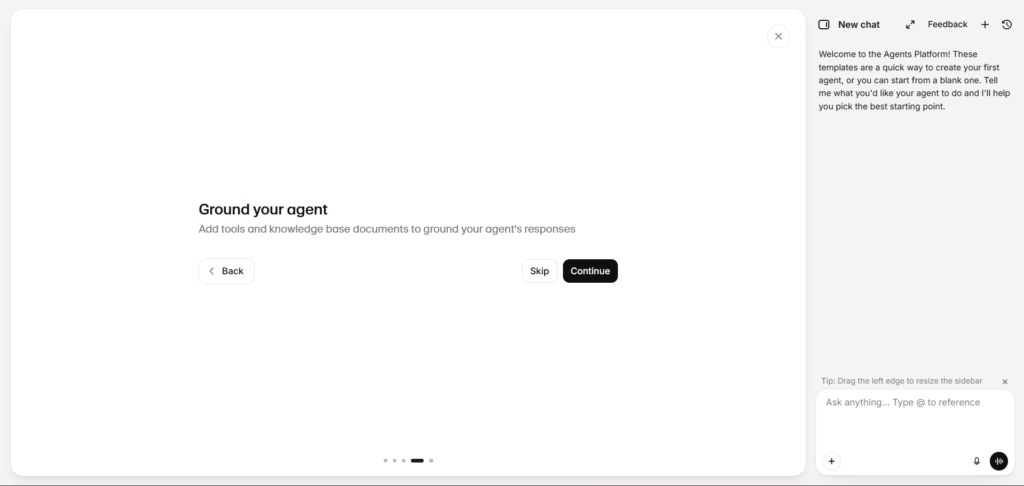
Step 2: Build and Connect a Focused Knowledge Base
Populate the agent’s connected knowledge base specifically with information relevant to your defined use case, rather than dumping your entire company knowledge base in at once, which tends to produce less accurate, less focused responses than a curated, purpose-built knowledge source.
Step 3: Configure Clear Escalation Paths to Human Agents
Before launching, explicitly define when and how the agent should hand off to a human, whether that is after a certain number of failed attempts to understand a request, or immediately upon a caller’s explicit request for a human representative.
Step 4: Test With Real, Varied Caller Phrasing
Test the agent against realistic variations in how actual customers phrase requests, not just the clean, expected phrasing used during initial development. Real callers rarely phrase requests exactly the way a development team anticipates during testing.
Step 5: Monitor Early Calls Closely Before Full Rollout
Run a limited pilot with close monitoring of actual call transcripts and outcomes before rolling the agent out to handle a business’s full call volume, since issues that seem minor in testing can compound significantly once handling genuine, unpredictable customer interactions at scale.
Step 6: Budget for Telephony and Connected LLM Costs Separately
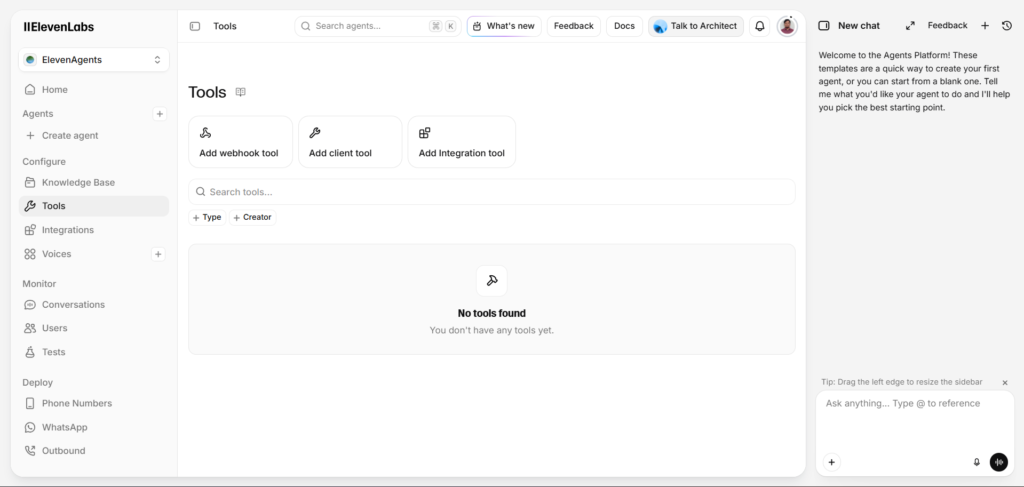
Remember that the ElevenLabs subscription covers the voice technology specifically, not the telephony provider connecting actual phone calls or, in some configurations, the connected language model powering response generation, both of which represent separate cost line items in a full deployment budget.
Step 7: Establish a Regular Review Cycle for Agent Performance
Once live, review call transcripts and outcomes on a regular cadence to identify patterns in failed or escalated calls, using those patterns to refine the knowledge base and conversation design on an ongoing basis rather than treating the initial launch configuration as permanent.
Key Benefits of ElevenLabs Conversational AI
Round-the-clock availability without proportional staffing costs is the most immediately compelling benefit for businesses handling meaningful call volume outside standard business hours, since a well-configured agent can handle after-hours calls that would otherwise go to voicemail or require expensive overnight human staffing.
Consistency in how information is delivered addresses a genuine, common problem with human call center staff, where answers to the same question can vary noticeably depending on which specific representative a caller happens to reach. A properly configured agent delivers policy and product information consistently every time, without the variation that comes from different staff members’ individual knowledge gaps or interpretation differences.
Scalability during demand spikes offers real practical value for businesses with seasonal or unpredictable call volume, since an automated agent can handle a sudden surge in calls without the lead time required to hire and train additional temporary human staff for a short-term spike in demand.
Cost efficiency at meaningful volume genuinely changes the economics of customer service for businesses handling large call volumes, since the marginal cost of an additional automated call is dramatically lower than the marginal cost of an additional human-handled call once initial setup and knowledge base development is complete.
The ability to iterate quickly on agent performance also represents a meaningful operational benefit compared to retraining a human team. Adjusting an agent’s knowledge base or conversation flow based on observed call patterns can happen within hours, while updating training and expectations across an entire human customer service team typically takes considerably longer to implement consistently.
Comparison Table
| Platform | Real-Time Latency | Knowledge Base Integration | Human Handoff Support | Entry Cost Model |
|---|---|---|---|---|
| ElevenLabs Conversational AI | Low, Flash-optimized | Yes, customizable | Yes, configurable | Included in paid plans, plus per-minute overage |
| Twilio Voice AI | Low | Yes | Yes | Usage-based, per minute |
| Google Cloud Contact Center AI | Low | Yes, deep Google integration | Yes | Custom enterprise pricing |
| Amazon Connect | Moderate | Yes, AWS-integrated | Yes | Usage-based, per minute |
| Vapi | Low, developer-focused | Yes | Yes | Usage-based, per minute |
Pricing and feature availability reflect publicly listed information as of mid-2026. Enterprise conversational AI platforms vary significantly in setup complexity and existing infrastructure requirements, so evaluating based on your team’s existing technical capacity matters as much as comparing raw feature lists.
Who ElevenLabs Conversational AI Actually Works Best For?
Businesses with high, predictable call volume around a narrow set of common questions, appointment scheduling, order status, basic account inquiries, get the clearest, most immediate return on deploying a conversational agent, since these use cases fit naturally within the technology’s current strengths.
Companies operating across multiple time zones or needing genuine after-hours availability benefit significantly from an agent that never needs to sleep, take breaks, or go home at the end of a shift, extending effective customer service coverage without proportional staffing cost increases.
Developers and technical teams building conversational AI into a broader product, rather than deploying it as a standalone customer service tool, should specifically review our dedicated guide, ElevenLabs API 2026: The Complete Guide Developers Wish They Had on Day One, since building a genuinely reliable conversational agent involves considerably more integration complexity than a simple text-to-speech feature.
Businesses with highly variable, complex, or emotionally sensitive customer interactions, serious complaint resolution or nuanced technical troubleshooting, for example, should treat conversational AI as a first-line filter rather than a complete replacement for human agents, since these interaction types still generally benefit from human judgment and empathy that current voice agent technology has not fully replicated.
FAQ
How much does ElevenLabs Conversational AI cost?
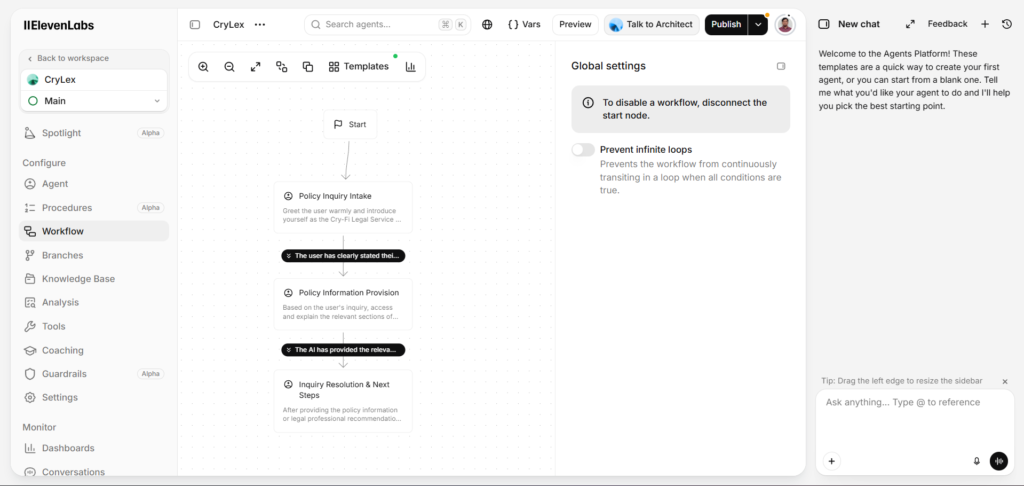
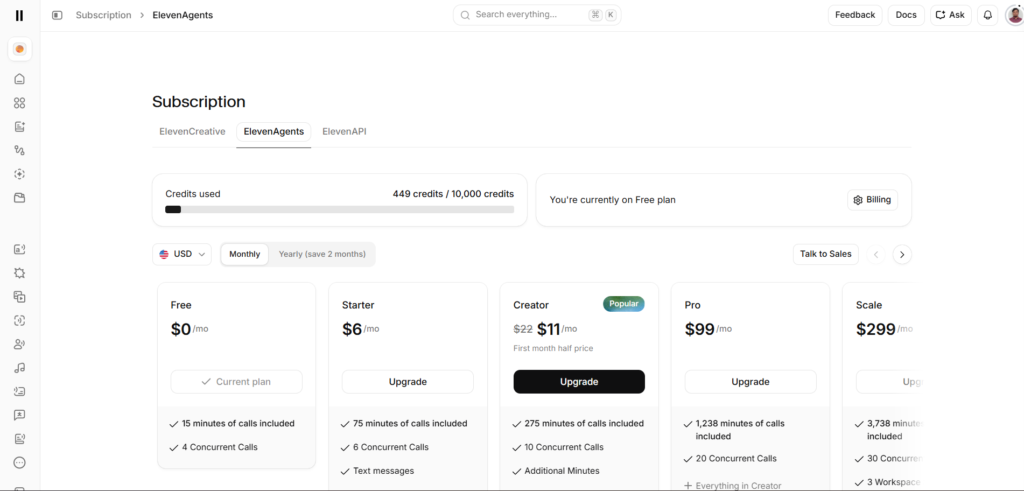
Conversational AI usage is billed based on call minutes rather than the character-based credits used for standard text-to-speech, with each subscription plan including a set allowance of minutes and a concurrent call limit. Additional usage beyond the included allowance is billed separately, with businesses needing to also budget for a telephony provider and, in some configurations, a connected language model, both billed independently from the ElevenLabs subscription itself.
Can ElevenLabs Conversational AI handle complex customer service issues?
Conversational AI performs best on well-defined, predictable interactions like scheduling, order status, or basic account questions, and is generally less effective for highly complex, emotionally sensitive, or unusual customer service situations that benefit from human judgment. Most successful deployments treat the agent as a first-line filter, handling routine interactions automatically while cleanly escalating more complex cases to human agents, rather than attempting to replace human customer service entirely across every possible interaction type.
How natural does an ElevenLabs voice agent actually sound on a phone call?
The underlying voice quality, powered by the same technology behind ElevenLabs’ broader voice cloning and text-to-speech products, is generally very natural sounding, though the overall conversational experience depends heavily on the specific implementation, including response latency and how well the connected language model handles unexpected phrasing or off-script questions. A well-configured agent with a properly tuned knowledge base tends to feel noticeably more natural than a poorly configured one using the identical underlying voice technology.
Does ElevenLabs Conversational AI require a separate phone system?
Yes, ElevenLabs provides the voice AI technology itself, but businesses need a separate telephony provider to actually connect and route phone calls to the agent, integrated through the API. This means a full deployment typically involves at least two vendor relationships, ElevenLabs for the voice AI and a telephony provider for the actual call routing infrastructure, rather than a single all-inclusive product covering both needs.
Can ElevenLabs Conversational AI speak multiple languages?
Yes, conversational agents can be configured to handle calls in multiple languages, leveraging the same multilingual capability that powers ElevenLabs’ broader text-to-speech and dubbing products. Businesses serving multilingual customer bases can configure agents to detect and respond in a caller’s language automatically or offer explicit language selection at the start of a call, though thorough testing across each supported language remains important, since performance and naturalness can vary somewhat between languages depending on the underlying model’s relative strength in each.
What happens if the AI agent cannot answer a caller’s question?
Well-designed deployments include clear escalation paths that transfer the call to a human agent when the AI cannot adequately address a caller’s request, either after a defined number of failed understanding attempts or immediately upon the caller’s explicit request for a human. Businesses deploying conversational AI should specifically design and test this escalation pathway carefully, since a smooth, clean handoff to a human agent produces a much better overall customer experience than a caller getting stuck in a frustrating loop with an agent that cannot resolve their actual issue.
Final Thoughts
ElevenLabs Conversational AI represents a genuinely more sophisticated product than the text-to-speech tool most people first associate with the company, requiring careful attention to knowledge base design, escalation pathways, and realistic use case scoping to deploy successfully rather than simply activating the technology and expecting it to handle any possible customer interaction.
The businesses seeing the strongest results tend to start narrow, a specific, well-bounded use case with predictable question patterns, rather than attempting to automate all customer service interactions simultaneously from day one. This measured approach allows for the kind of monitoring and refinement that separates a genuinely useful deployment from a frustrating one that generates more complaints than it resolves.
Cost planning also deserves specific attention, since the ElevenLabs subscription itself represents only part of a full deployment’s real cost once telephony and any connected language model expenses are factored in accurately. Businesses that budget only for the voice AI component and neglect these adjacent costs often find their actual deployment expenses meaningfully higher than initially projected.
Start with a single, well-defined use case, monitor early performance closely, and expand scope gradually based on what actually works rather than launching a broad, unproven deployment across your entire customer service operation at once.
External Links: