If you are trying to decide between Leonardo AI vs Midjourney in 2026, the honest answer is that both tools are genuinely good at different things. This is not a case where one tool wins outright. It is a case where the right answer depends entirely on what you are actually making, how you work, and what you are willing to pay. This guide breaks down every meaningful difference with real 2026 data so you can make that call clearly.
Table of Contents
What Each Tool Is Built For?
Before going through individual differences, it helps to understand the core philosophy behind each platform. Leonardo AI vs Midjourney is not really a fair direct comparison, because the two tools are solving for different outcomes.
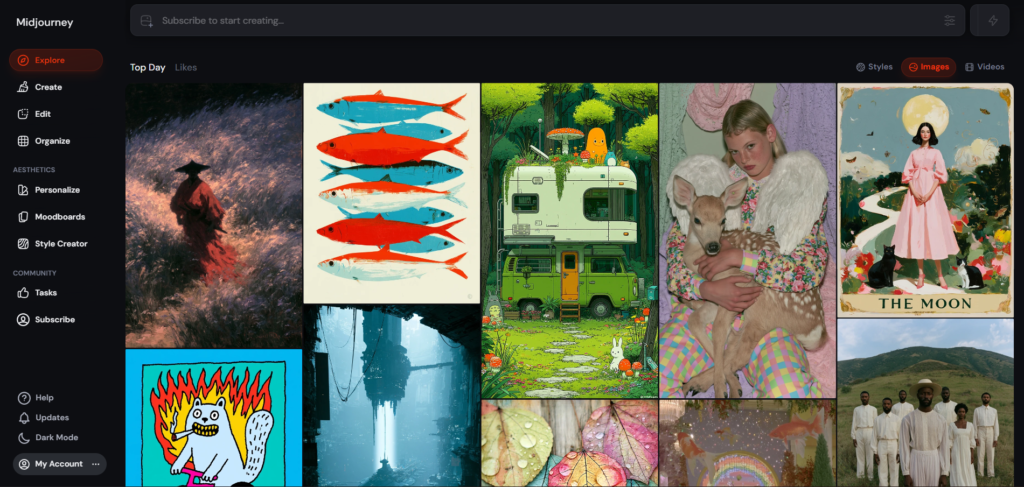
Midjourney is built to produce beautiful images with minimal effort. You type a prompt, and the model gives you its artistic interpretation. The result is often visually striking, with strong aesthetic coherence that feels deliberate and considered. The tool does not give you much control over the process. It does not want to. That is part of the design.
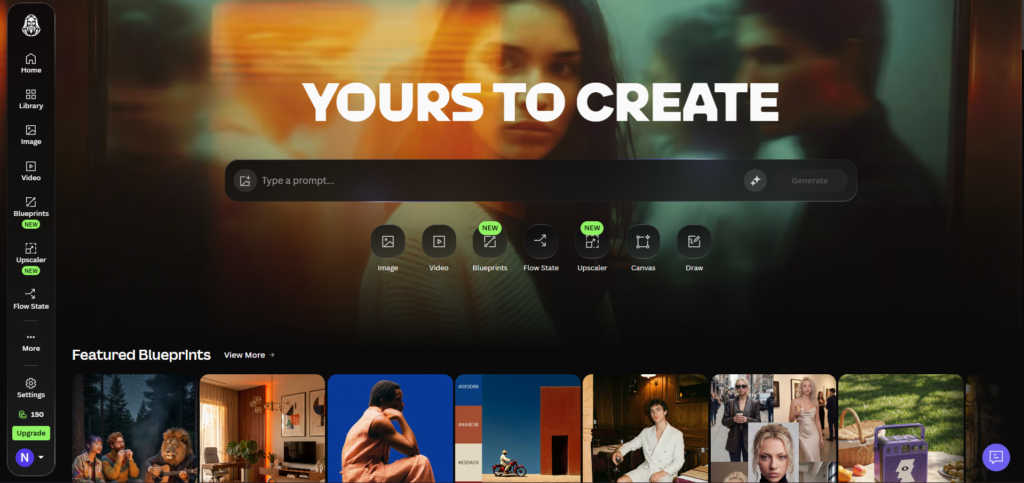
Leonardo AI is built to give you control over the outcome. The platform treats you as the creator and the AI as a highly responsive tool. You choose the model, configure the settings, train your own custom models, edit the output in a full canvas, and iterate systematically. The default aesthetic is less opinionated, which means results require more prompting skill, but the ceiling for what you can produce with the right setup is higher.
Understanding this distinction upfront makes the rest of the comparison easier to interpret.
Difference 1: Image Quality and Default Aesthetic
Midjourney’s default output quality is the standard that other AI image generators are measured against in 2026. The current production model, V6.1, produces images with strong artistic coherence, excellent handling of light and shadow, and a cinematic quality that feels intentional rather than accidental. For creative and editorial work where the image needs to carry visual weight on its own, Midjourney’s defaults are genuinely ahead of the competition.
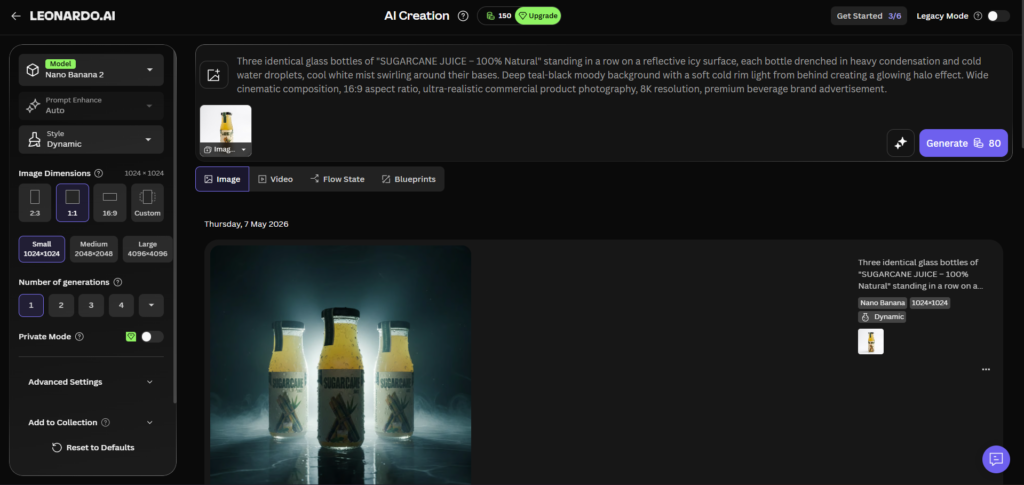
Leonardo AI, running the Phoenix 2.0 model as its flagship in 2026, produces high-resolution photorealistic images that excel when you need accuracy to a prompt rather than artistic interpretation. Leonardo is stronger for precise compositional requirements, technical accuracy, and styles that blend multiple references. Phoenix 2.0 also handles text rendering within images considerably better than previous versions, which is useful for any visual that includes signage, labels, or typography.
The practical difference comes down to this: Midjourney produces more striking images with less effort. Leonardo produces more controllable images with the right settings. A creator who needs a beautiful atmospheric landscape with minimal prompting will likely prefer Midjourney’s output. A creator who needs a specific product in a specific setting with a specific background will likely get closer to the target faster with Leonardo.
Difference 2: Interface and Workflow
Midjourney has moved most of its experience to a web interface at midjourney.com, though Discord remains available. The web interface allows organising, editing, and generating without Discord, which is a meaningful improvement over earlier years when Discord was the only option. However, the fundamental workflow is still prompt-in, image-out. You type a description, adjust a few parameters, and receive results. There is no model selector, no pre-generation settings panel, and no post-generation editing within the platform itself.
Leonardo AI runs entirely in a dedicated web app with a structured dashboard. You navigate between image generation, video generation, the AI canvas, real-time canvas, model training, and asset management through a clear left sidebar. The interface asks you to make choices before generating: which model, what resolution, which features to activate, how many variations. Those choices require more familiarity with the platform, but they also give you substantially more control over the output.
The honest observation is that Midjourney’s interface is easier to start with. Leonardo AI’s interface rewards the time you put into learning it. For someone who will use the tool daily for professional output, Leonardo’s structured workflow becomes faster and more efficient over time. For someone who wants results in the first five minutes, Midjourney’s simpler interaction model feels better.
Difference 3: Editing Tools
This is one of the most significant practical differences between the two platforms, and it is not close.
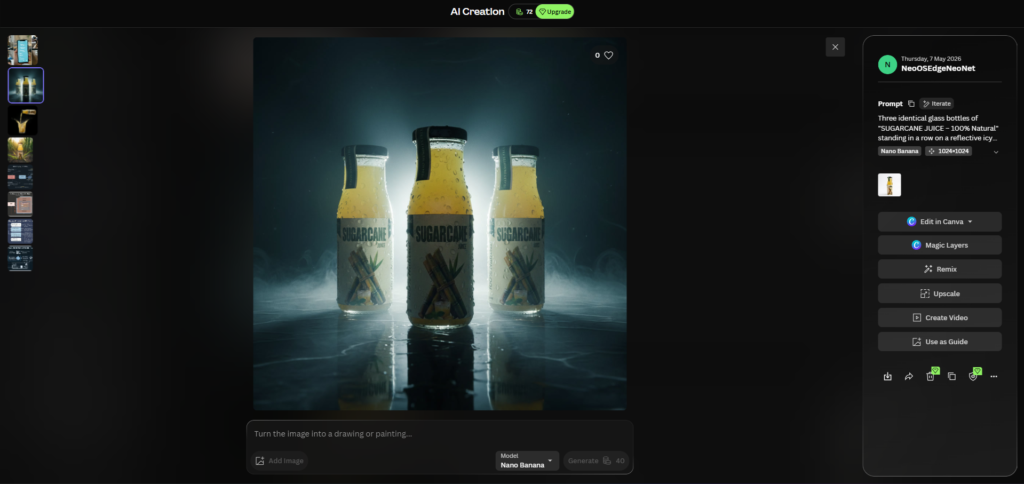
Leonardo AI has a full AI Canvas that includes inpainting (edit specific areas of an image by drawing a mask and describing the replacement), outpainting (extend the image beyond its original edges in any direction), background removal, eraser, and a Real-Time Canvas that generates live as you sketch. When a generated image has a problem, such as an incorrect element, a poorly rendered hand, or an unwanted object in the background, you can fix it directly inside the platform without starting from scratch.
Midjourney has no comparable editing environment. Its in-platform tools are limited to upscaling, variation generation, and some basic region editing in more recent versions. If you need to fix a specific problem in a Midjourney image, your options are to regenerate with a refined prompt and hope for a better result, or take the image into an external editor like Photoshop.
For professional workflows where iteration and precision matter, this difference is significant. The ability to fix a near-perfect image rather than regenerate everything from scratch saves considerable time and tokens. Our dedicated Leonardo AI Canvas tutorial covers exactly how to use these editing features step by step.
Difference 4: Custom Model Training
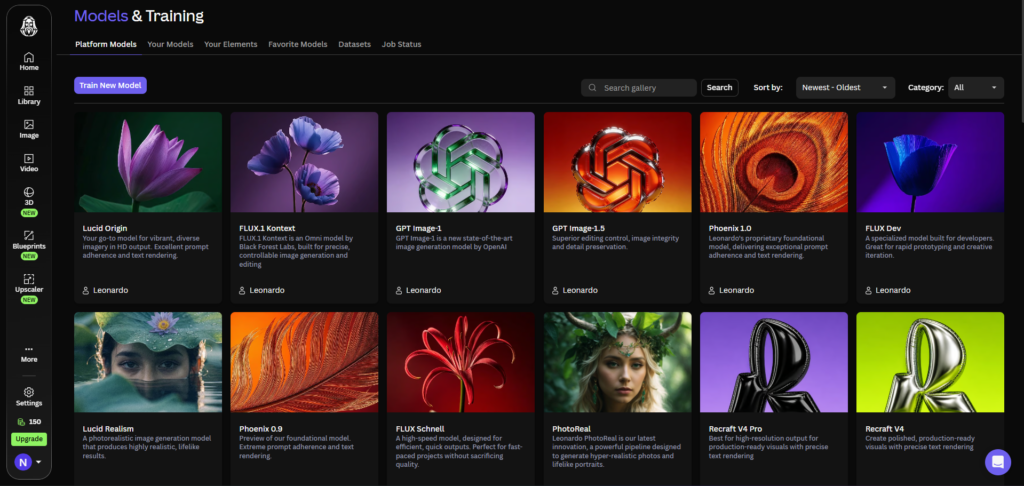
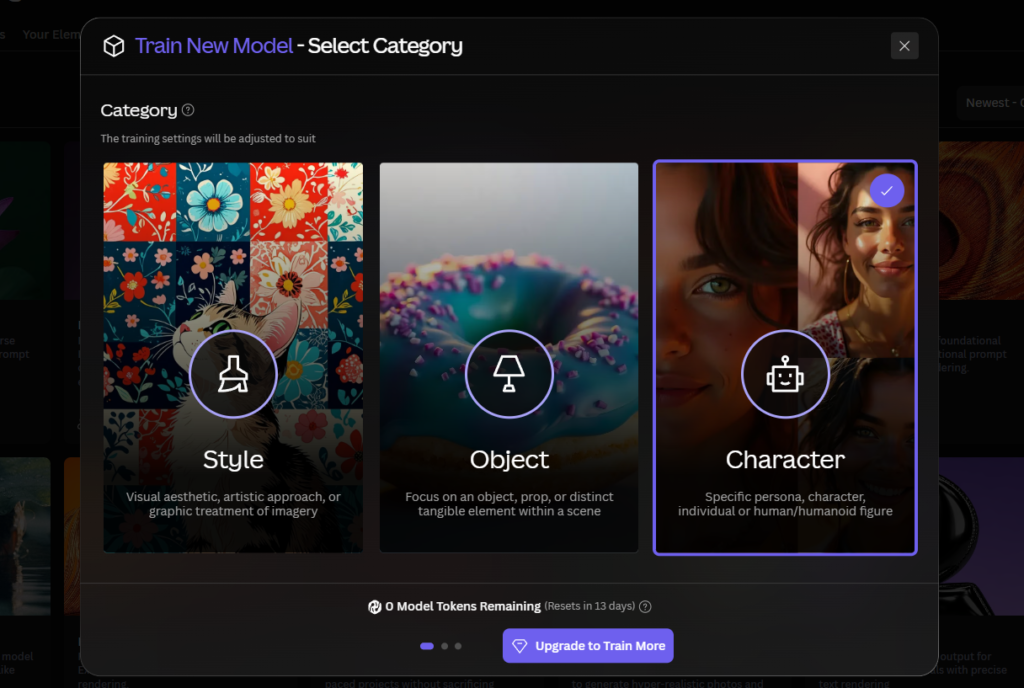
Leonardo AI allows you to train custom LoRA models directly inside the platform starting from its Essential plan at $12 per month. You upload 10 to 20 reference images, the platform trains a lightweight custom model in 10 to 15 minutes, and the resulting model learns to reproduce the visual patterns from your reference set. This is how professional users maintain brand consistency, character consistency across a series, or a specific art style across many different projects.
Midjourney offers no custom model training at any price point. Every generation uses Midjourney’s proprietary model, and while you can guide output through detailed prompts and style references, you cannot train the system to reliably reproduce your own aesthetic without prompt engineering every time.
For freelancers, agencies, and game developers who need consistent output across a body of work, this difference alone may determine which tool fits their workflow. Custom training is explored in detail in our Leonardo AI LoRA training guide, which covers the full process from dataset preparation to applying a trained model.
Difference 5: Character and Subject Consistency
Reproducing the same character, product, or subject across multiple images is one of the hardest problems in AI image generation. Both platforms have improved in this area, but their approaches differ.
Leonardo AI’s Consistent Character Engine, available from the Essential plan upward, allows you to provide reference images of a character and maintain facial identity at approximately 85 to 90 percent consistency across subsequent generations. You are not required to retrain a model each time. The engine works by using your reference images to constrain the generation. This is particularly practical for illustrators producing a series, game developers building character sheets, and content creators maintaining a recognisable visual identity.
Midjourney does not have a native character consistency tool with the same function. Users rely on style reference prompting and the seed parameter to approximate consistency, but this requires significant prompt engineering skill and still produces variability across generations. The results are workable for experienced users, but they require considerably more manual effort than Leonardo’s structured consistency feature.
Difference 6: Privacy and Private Generation
This difference matters more than many comparison articles acknowledge, and the gap between the platforms is significant.
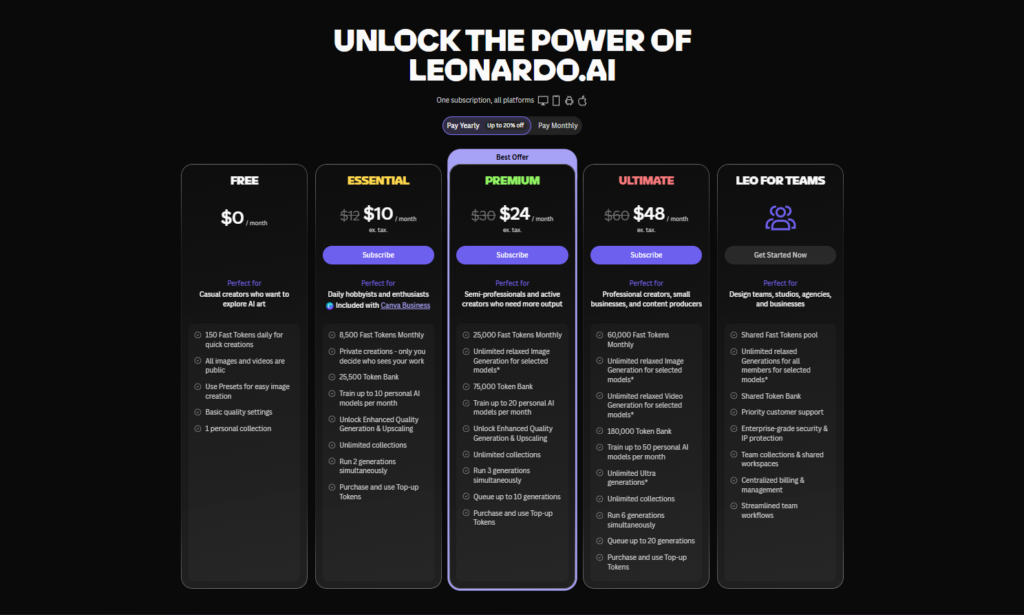
On Leonardo AI, private generation is available on all paid plans starting at the Essential tier ($12 per month). Your images are not visible to other users. From $12 per month, your creative work stays private.
On Midjourney, all images are visible in the public gallery by default until you reach the Pro plan at $60 per month, which is when Stealth Mode becomes available. Basic ($10/month) and Standard ($30/month) subscribers have every image they generate publicly visible. For client work, pre-launch campaigns, confidential projects, or any creative work you would not want competitors browsing, Midjourney requires the $60 Pro plan as a minimum. That is five times the cost of Leonardo’s entry-level privacy option.
Companies with gross annual revenue exceeding $1,000,000 USD are also required to use Midjourney’s Pro or Mega plans for commercial use under the terms of service. This is a compliance consideration for larger organisations that is not relevant on Leonardo AI.
Difference 7: Free Plan and Entry Cost
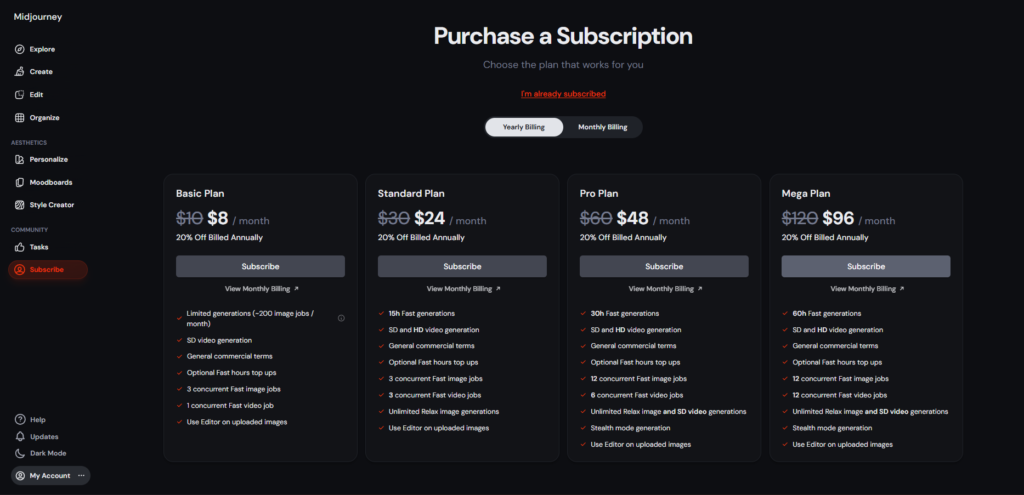
Midjourney has no free plan as of 2026. There is no trial and no free tier. The cheapest way to generate a single Midjourney image is the Basic plan at $10 per month. If you want to evaluate Midjourney before paying, you need to pay.
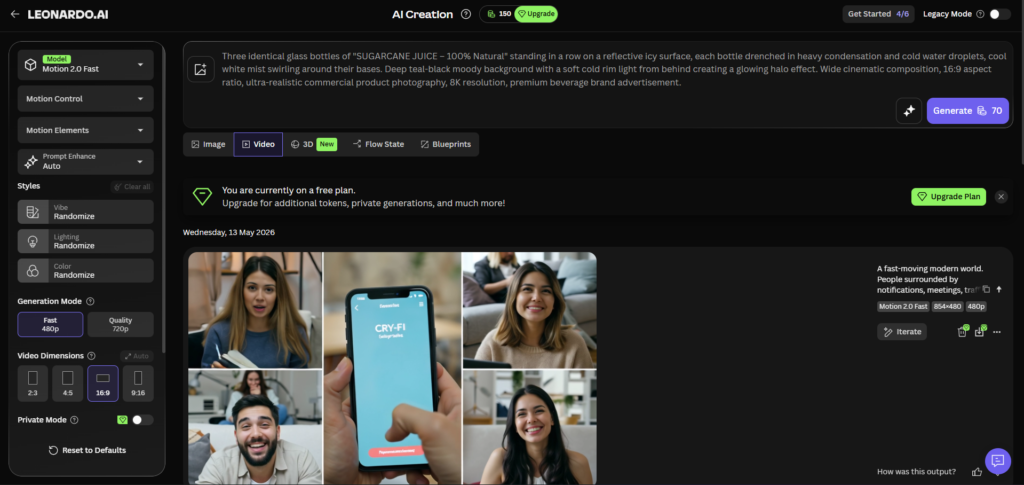
Leonardo AI has a permanent free plan with 150 tokens per day. At standard resolution and settings, this produces 20 to 35 images daily. You can use the platform indefinitely without paying, evaluate whether it fits your workflow, and upgrade only when the free plan’s limitations become a friction point.
For anyone comparing the two tools before committing money, this difference is straightforward. Leonardo AI’s free plan is a genuine evaluation environment. Midjourney requires a financial commitment before you can generate your first image. If you have not already tried Leonardo’s free plan, our Leonardo AI free plan guide explains exactly what you get and what you cannot do at zero cost.
Difference 8: Video Generation
Leonardo AI integrates video generation through its own Motion models (Motion 1.0, Motion 2.0, Motion 2.0 Fast) for animating still images, and through third-party integrations including Veo 3 for text-to-video generation. Video generation is available on paid plans, though it is token-intensive. A 5-second Veo 3 clip costs 2,500 fast tokens.
Midjourney focuses on image and short video clip generation, with video capabilities that have been expanding through 2025 and into 2026. The platform is not a dedicated video generation tool. Users who need significant video output will typically use Leonardo’s integrations or move to dedicated platforms like Runway ML or Kling AI.
Both platforms are best treated as image-first tools with supplementary video capabilities. Neither is the right answer if video generation is your primary use case.
Difference 9: Commercial Licensing Terms
All paid Midjourney plans include commercial usage rights. However, companies with gross annual revenue exceeding $1,000,000 USD must use the Pro or Mega plan for commercially legal use, as confirmed in Midjourney’s official terms of service. Basic and Standard subscribers at smaller companies can use images commercially, but this revenue threshold catches some businesses off guard.
Leonardo AI grants full intellectual property ownership and commercial rights to all paid plan subscribers regardless of company size or revenue. There is no revenue threshold. An Essential plan subscriber at $12 per month has the same commercial rights as a Maestro subscriber.
Free plan users on both platforms should review terms carefully. Midjourney has no free plan, so this is irrelevant there. On Leonardo AI’s free plan, the platform retains asset ownership, and all images are public, though users receive a commercial use license.
Full Pricing Comparison: 2026
| Feature | Leonardo AI | Midjourney |
|---|---|---|
| Free plan | Yes — 150 tokens/day, permanent | No — discontinued in 2024 |
| Entry paid plan | Essential: $12/mo ($10 annual) | Basic: $10/mo ($8 annual) |
| Mid tier | Premium: $30/mo ($24 annual) | Standard: $30/mo ($24 annual) |
| Professional tier | Ultimate: $60/mo ($48 annual) | Pro: $60/mo ($48 annual) |
| Highest tier | — | Mega: $120/mo ($96 annual) |
| Private generation | From Essential ($12/mo) | From Pro ($60/mo) only |
| Custom model training | Yes, from Essential plan | No |
| Editing canvas | Yes, full inpaint and outpaint | No |
| Character consistency tool | Yes, from Essential plan | No native tool |
| API access | Yes, from Premium plan | Limited API availability |
| Video generation | Yes, via Motion and Veo 3 | Limited, image-first platform |
| Interface | Dedicated web app | Discord and web |
| Commercial rights threshold | None — all paid plans | $1M+ revenue requires Pro/Mega |
At the $30 per month tier, Leonardo AI and Midjourney are priced identically. At that price, Leonardo AI offers more features per dollar: custom model training, a full editing canvas, character consistency, API access on the next tier up, and no revenue threshold on commercial licensing. Midjourney at the same price offers stronger default aesthetic quality and unlimited Relax Mode generation for users who prioritise pure artistic output over workflow features.
For a detailed breakdown of Leonardo’s plan tiers with full token math, see our Leonardo AI pricing guide.
Use Case Verdict Table
| Use Case | Recommended Tool | Reason |
|---|---|---|
| Editorial and artistic illustration | Midjourney | Stronger default aesthetic with minimal effort |
| Game concept art and character sheets | Leonardo AI | Custom training, character consistency, canvas editing |
| Brand and marketing visuals at scale | Leonardo AI | LoRA training for brand consistency, commercial rights from $12/mo |
| Casual personal creative exploration | Leonardo AI | Permanent free plan, no upfront cost |
| Confidential client work on a budget | Leonardo AI | Private generation from $12/mo vs Midjourney’s $60/mo |
| High-volume artistic content creation | Midjourney Standard | Unlimited Relax Mode makes per-image cost very low |
| Product mockups and precise compositions | Leonardo AI | Phoenix 2.0 prompt adherence, inpainting for corrections |
| Social media content creation | Either | Depends on whether volume or aesthetic quality is the priority |
Can You Use Both Together?
Yes, and a meaningful number of professional creators do exactly this. The two tools are not directly competing for the same output. Midjourney for atmospheric mood boards, concept direction, and artistically rich reference images. Leonardo AI for production assets, character consistency, custom-trained brand models, and anything that needs editing or iteration.
Using both platforms in the same month costs a minimum of $22 per month (Midjourney Basic at $10 plus Leonardo Essential at $12). For studios and agencies where both tools serve genuinely different roles in the workflow, this is a sensible arrangement. For individual creators, choosing one and learning it well is usually more efficient than maintaining two subscriptions that partially overlap.
Who Should Choose Leonardo AI?
Leonardo AI is the stronger choice for creators who need a repeatable, controllable production workflow. If you produce visual content for clients, need to maintain consistency across a series of images, want to train custom models on your own style or brand assets, need private generation without paying $60 per month, or want to edit generated images within the same platform rather than exporting to an external editor, Leonardo AI is the more complete tool for your use case.
It is also the right choice for anyone evaluating AI image generation before committing money. The permanent free plan gives you access to real production models at no cost, which no Midjourney tier does.
Who Should Choose Midjourney?
Midjourney is the stronger choice for creators who prioritise visual quality and aesthetic depth over workflow control. If you produce editorial illustrations, creative marketing imagery, concept art that needs to feel atmospherically rich, or any work where the image’s visual impact is the primary requirement and you are comfortable with minimal post-generation editing, Midjourney’s default output is genuinely ahead of any comparable tool.
It is also worth noting that the Standard plan’s unlimited Relax Mode makes the economics compelling for high-volume image generation where speed is not critical. At $30 per month with effectively unlimited slow generation, the per-image cost for users who plan carefully is very low.
For a broader view of how both tools fit into a complete creative workflow, our complete Leonardo AI guide covers the platform’s full range of capabilities in detail.
Frequently Asked Questions
Is Leonardo AI better than Midjourney in 2026?
Neither tool is universally better. Midjourney produces more artistically striking images by default and is the benchmark for aesthetic quality in AI image generation. Leonardo AI offers more tools, better workflow control, a full editing canvas, custom model training, character consistency features, and private generation at a far lower price threshold. For pure visual impact with minimal prompting effort, Midjourney edges ahead. For production workflows requiring consistency, editing, and feature depth, Leonardo AI is the more capable platform.
Does Midjourney have a free plan in 2026?
No. Midjourney discontinued its free trial in late 2024, and there is no free tier as of 2026. The cheapest option is the Basic plan at $10 per month ($8 per month on annual billing), which gives you approximately 200 standard image generations before fast GPU hours are exhausted. There is no Relax Mode fallback on the Basic plan. If you want to evaluate AI image generation before spending money, Leonardo AI’s permanent free plan at 150 tokens per day is currently the only major platform offering meaningful free access.
How do the pricing structures of Leonardo AI and Midjourney compare?
At the $10 to $12 per month entry level, Leonardo’s Essential plan includes private generation, custom model training, character consistency, and full IP ownership. Midjourney’s Basic plan at $10 per month gives you approximately 200 image generations with public visibility and no stealth mode. At the $30 per month level, both platforms sit at the same price with different strengths. Leonardo gives you more feature depth. Midjourney gives you stronger aesthetic output and unlimited slow generation. At $60 per month, Leonardo’s Ultimate plan offers 60,000 tokens, while Midjourney’s Pro adds Stealth Mode. The full numbers are detailed in our Leonardo AI pricing guide.
Can Leonardo AI replicate Midjourney’s image quality?
Not by default. Midjourney’s V6.1 model produces a distinctive aesthetic that Leonardo’s models do not directly replicate out of the box. However, you can train a custom LoRA on Midjourney-style outputs and apply it to Leonardo generations, which closes the gap considerably. More practically, many prompt styles that look outstanding in Midjourney can be approximated in Leonardo with careful model selection and prompt crafting. Phoenix 2.0 and the Lucid suite both produce high-quality results, just with a different aesthetic character than Midjourney’s models.
Which tool is better for game development?
Leonardo AI is the clearer choice for game development. The combination of custom LoRA training for maintaining art style consistency across assets, the Consistent Character Engine for character sheets and variants, the AI Canvas for editing individual asset problems, and the platform’s origins in game asset creation make it the stronger fit. Midjourney produces beautiful concept art, but it offers no tools for the production side of game development: no consistency enforcement, no editing canvas, no custom training. For the concept direction phase, Midjourney is useful. For production asset generation, Leonardo AI is the more practical tool. See our detailed Leonardo AI for game developers guide for a full workflow breakdown.
Do both platforms allow commercial use?
Yes, with important nuances. All paid Midjourney plans include commercial rights, but companies with gross annual revenue exceeding $1,000,000 USD must use the Pro or Mega plan ($60 or $120 per month) to comply with Midjourney’s terms of service. Standard and Basic subscribers at smaller companies can use images commercially. Leonardo AI grants full commercial rights and intellectual property ownership to all paid plan subscribers with no revenue threshold. Paid subscribers on both platforms retain rights to their generated images. Free plan users on Leonardo AI receive a commercial license but should review current terms, as the platform retains asset ownership.
Final Thoughts
Leonardo AI vs Midjourney in 2026 is not a question with a single right answer. Midjourney produces more visually compelling images by default, asks less of you before returning results, and has built an aesthetic identity that many creators genuinely prefer. Leonardo AI gives you more control, more tools, a lower entry point for private work, and a workflow that scales with professional needs in a way that Midjourney’s closed system does not.
The most useful framing is not which tool is better overall, but which tool fits your actual working pattern. If you generate images for personal creative projects and care most about how striking each image looks, Midjourney is worth the $30 per month. If you produce images for clients, need to maintain consistency, want to edit rather than regenerate, or value feature depth over default aesthetics, Leonardo AI’s Premium plan at $30 per month offers more for the same cost.
If you are not sure yet, start on Leonardo AI’s free plan. Spend a week with it. That evaluation costs you nothing and gives you a realistic baseline for comparison before you commit money to either platform.
Backlink Opportunities
| S.No | Site | Outreach Angle |
|---|---|---|
| 1 | G2 Learn Hub learn.g2.com |
Reference in Leonardo AI and Midjourney comparison review pages |
| 2 | Creative Bloq creativebloq.com |
Guest post: “Midjourney vs Leonardo AI — which one should designers use in 2026?” |
| 3 | MakeUseOf makeuseof.com |
“Is Midjourney worth it when Leonardo AI is free?” — fits their evergreen comparison format |
| 4 | TechRadar techradar.com |
Submit as cited resource in AI image generator roundup updates |
| 5 | Blogging Wizard bloggingwizard.com |
Content creators comparing tools for blog visuals — strong fit |
| 6 | HubSpot Blog blog.hubspot.com |
“Best AI image generators for marketers” roundup link pitch |
| 7 | Tom’s Guide tomsguide.com |
They publish AI tool comparisons regularly — submit as reference |
| 8 | Elegant Themes Blog elegantthemes.com/blog |
WordPress designers comparing AI image tools — this article fits exactly |
| 9 | SitePoint sitepoint.com |
Community article pitch on AI tool workflows for web designers |
| 10 | Tooltester tooltester.com |
Submit comparison URL to their Leonardo AI and Midjourney tool listing pages |