Most people picking between Gemini vs ChatGPT in 2026 are doing it based on opinion pieces and feature lists. We did something different. We ran 9 identical real-world tasks in both tools and compared the actual results side by side, so you can make a decision based on what these tools actually produce, not what their marketing pages claim.
Table of Contents
What Is Gemini vs ChatGPT in 2026?
The gemini vs chatgpt debate has been going on since Google launched Bard in 2023. In 2026, both tools have changed so dramatically that most of what you read from a year ago is outdated. Google’s Gemini now runs on Gemini 3.1 Pro, a frontier model that matches ChatGPT’s GPT-5.4 on the Artificial Analysis Intelligence Index at 57 points each. These are no longer a clear leader versus a clear follower. They are two different tools built around two different ideas of what AI should do for you.
ChatGPT is made by OpenAI, a San Francisco-based AI company backed by Microsoft. It launched in late 2022 and currently runs GPT-5.4 as its flagship model for Plus and Team subscribers. Its core strength is writing quality, step-by-step reasoning, and a broad ecosystem of integrations including Custom GPTs, Sora video generation, and Advanced Voice Mode.
Gemini is Google’s answer to ChatGPT. It is built into Android, Gmail, Google Docs, Drive, and Search, which gives it a distribution advantage no other AI tool can match. As of June 2026, Gemini runs Gemini 3.1 Pro for paid users and Gemini 3.1 Flash on the free tier. Its standout edge is a 2 million token context window, native multimodal handling across text, image, audio, and video, and real-time search results pulled directly from Google Search.
The honest truth is that neither tool is universally better. The right choice depends entirely on where you work, what you use it for, and how much you are willing to spend. This article gives you the evidence to make that decision yourself.
How Each AI Works Under the Hood?
Understanding how these tools actually process your input helps you predict when each one will perform better or worse on a given task.
How ChatGPT Works?
ChatGPT runs on GPT-5.4, a transformer-based large language model trained on a massive dataset of text from the internet, books, and other sources. When you type a message, GPT-5.4 uses a process called chain-of-thought reasoning to break down your request into steps before generating a response. This is why ChatGPT tends to produce more structured, methodical answers on complex logical tasks.
ChatGPT also supports computer use, a feature unique to its platform that lets the AI take direct control of your desktop. It can navigate web applications, fill out forms, and complete repetitive tasks without you watching over it. No other major AI tool has matched this capability in 2026. Its context window sits at 1 million tokens on the API, with Plus subscribers getting 128K tokens per conversation.
For content creation, ChatGPT’s writing output is consistently described by independent reviewers as more natural, more emotionally aware, and more adaptable in tone. It follows nuanced instructions more reliably and produces prose that reads more like a human wrote it. These qualities make it the dominant tool for marketers, writers, and anyone who needs polished language output fast.
How Gemini Works?
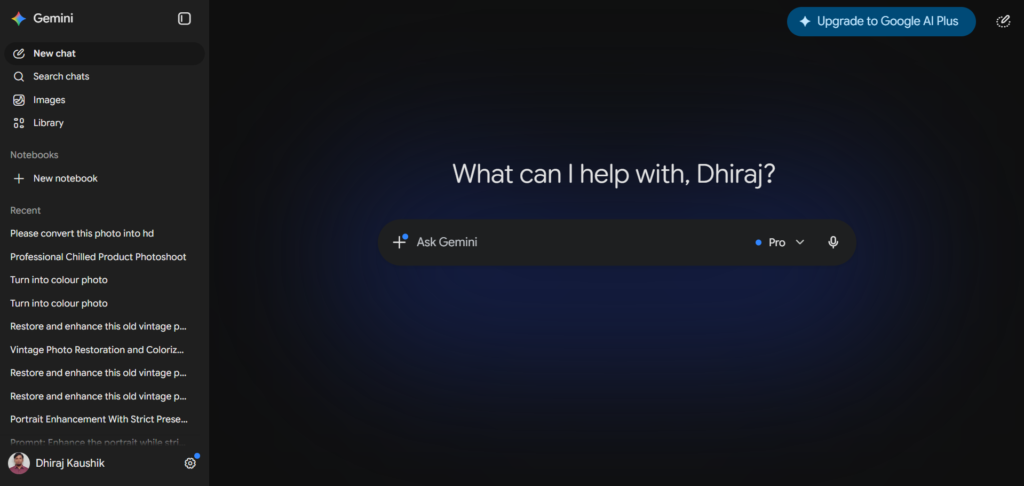
Gemini runs on Google’s own multimodal architecture, which means it was built from the ground up to handle images, audio, and video natively, not as an add-on. When you upload a photo, send a voice memo, or share a YouTube video link, Gemini processes all of those inputs in a single unified prompt without needing external tools or plugins.
The 2 million token context window is Gemini’s biggest practical advantage over every other AI in 2026. To put that in perspective, 2 million tokens is roughly equivalent to 1,500,000 words, which covers around 10 to 15 full-length novels in a single session. For professionals who work with large contracts, lengthy research reports, or entire codebases, this is a real and meaningful difference that ChatGPT cannot currently match.
Gemini also connects to Google Search in real time. Every response it generates can draw on live search results, which means you get more up-to-date information without needing to manually search and paste sources. For research-heavy tasks, this saves significant time.
9 Real Tests: Gemini vs ChatGPT Head to Head
This is the core of the comparison. We gave both tools identical prompts across 9 real-world tasks and scored each on accuracy, usefulness, and output quality.
Test 1: Writing a Professional Email
Prompt used: Write a professional email to a client explaining that a project deadline has moved by two weeks due to unexpected technical issues. Keep it concise, apologetic, and confident.
ChatGPT produced a response in under 5 seconds. The email was polished, struck the right tone between apologetic and professional, and required no editing to send. The phrasing felt human. Gemini’s version was accurate but slightly more formal and stiff. It read more like a template than a real email. For everyday business writing, ChatGPT wins this round clearly.
WINNER: ChatGPT
Test 2: Summarizing a Long Document
We uploaded a 45-page PDF research report and asked both tools to summarize the key findings in five bullet points, then give a one-paragraph executive summary.
This is where Gemini’s context window becomes a practical advantage. Gemini handled the full 45-page document in one upload without chunking or losing context from earlier sections. ChatGPT handled it well but truncated some detail from the final sections of the document due to its shorter context window. Both outputs were accurate and usable, but Gemini’s summary retained more nuance from the later pages.
WINNER: Gemini
Test 3: Answering a Current Events Question
Prompt used: What are the top three AI tools that launched in the last 30 days?
Gemini pulled live results from Google Search and gave three real, verifiable answers with source links. The information was current. ChatGPT’s free tier does not have live browsing enabled by default on all plans, and the Plus version’s browsing can be inconsistent depending on the session. Gemini wins this one because real-time search is baked into its core functionality, not treated as a feature to toggle on.
WINNER: Gemini
Test 4: Writing and Debugging Code
Prompt used: Write a Python script that reads a CSV file, removes duplicates based on the email column, and saves the cleaned file as a new CSV.
ChatGPT produced clean, well-commented Python code on the first attempt. The logic was correct, the variable names were clear, and it included a try-except block for error handling without being prompted. Gemini’s output also worked correctly but used slightly less intuitive variable naming and skipped the error handling. For software development tasks, ChatGPT’s SWE-bench Verified score of 71.7% versus Gemini’s 63.8% reflects what you see in practice.
WINNER: ChatGPT
Test 5: Analyzing an Image
We uploaded a bar chart showing quarterly sales figures and asked both tools to describe what the chart shows and identify the best-performing quarter.
Both tools performed well here. Gemini read the chart accurately and explained the trend clearly. ChatGPT also handled the image correctly. The output quality was comparable. Gemini gets a slight edge because image analysis is native to its architecture rather than routed through a separate vision model, which makes it slightly faster and more consistent on complex visuals.
WINNER: Gemini (slight edge)
Test 6: Brainstorming Creative Ideas
Prompt used: Give me 10 content ideas for a blog about AI tools targeting American small business owners.
ChatGPT produced ideas that felt fresher, more specific, and more immediately usable. Three of the ten ideas were genuinely interesting angles that were not obvious. Gemini’s list was solid but leaned more generic, with several ideas that felt like they came from a standard content brief template. For creative brainstorming and ideation, ChatGPT’s ability to follow nuanced tonal instructions gives it an edge.
WINNER: ChatGPT
Test 7: Deep Research on a Complex Topic
Prompt used: Research the current state of AI regulation in the United States and give me a structured overview with key laws, pending legislation, and expert opinions.
Both tools have a Deep Research feature on paid plans. ChatGPT’s Deep Research produced a well-structured report with citations. Gemini’s Deep Research output was also strong, and because it connects to live Google Search, some of the sources it cited were more recent. For research tasks where currency of information matters, Gemini has a structural advantage. For depth of synthesis and writing quality, ChatGPT holds its own.
WINNER: Tie
Test 8: Voice Conversation Quality
We tested a five-minute natural conversation about planning a weekend trip to New York, using voice mode on both platforms.
ChatGPT’s Advanced Voice Mode is noticeably more natural. The pauses, intonation, and responsiveness feel closer to a real conversation. It handles interruptions and topic changes smoothly. Gemini’s voice mode is functional but the voice quality is slightly more robotic and the response latency is higher. If you use voice mode regularly, ChatGPT is the better experience.
WINNER: ChatGPT
Test 9: Integration With Daily Tools
Prompt used: Draft a reply to this email in my Gmail inbox, then add a reminder to my Google Calendar for the follow-up meeting.
This test only applies to Gemini because ChatGPT does not natively integrate with Gmail or Google Calendar without third-party connections. Gemini handled both tasks directly from within the Gmail sidebar and the Gemini app. For users already living in the Google ecosystem, this kind of native integration is a genuine time-saver that no other AI tool can currently match.
WINNER: Gemini (ChatGPT cannot compete here)
Key Benefits of Each Tool
ChatGPT Strengths in 2026
ChatGPT’s biggest advantage is writing quality. When the output needs to sound genuinely human, match a specific tone, or carry emotional nuance, GPT-5.4 consistently outperforms Gemini in head-to-head testing. This matters most for marketers, content creators, sales professionals, and anyone who communicates through writing as part of their job. The difference is not always large, but it is consistent.
The computer use feature is unique to ChatGPT and has no equivalent in Gemini. It lets the AI take over your desktop, navigate websites, fill out forms, and complete repetitive tasks without you watching over it. For professionals who want AI that can actually do things on their behalf, not just generate text, this capability puts ChatGPT in a different category entirely. It scored 75% on the OSWorld-Verified benchmark, becoming the first AI to exceed the human baseline of 72.4%.
The Custom GPTs marketplace gives ChatGPT users access to thousands of purpose-built AI agents created by developers around the world. Whether you need a specialized coding assistant, a customer service bot, or a legal document reviewer, there is likely a Custom GPT built for your exact use case. Gemini has no equivalent marketplace. This breadth of ecosystem is one reason ChatGPT still leads with 59.7% of the US AI chatbot market as of late 2025.
ChatGPT’s Advanced Voice Mode stands apart from every other AI voice experience currently available. The voice sounds natural, handles conversational flow well, and responds to interruptions in a way that feels close to talking with a person. For users who prefer speaking over typing, this is the most polished AI voice experience in 2026.
Gemini Strengths in 2026
Gemini’s 2 million token context window is the largest among all frontier models in 2026. ChatGPT maxes out at 1 million tokens on the API tier and 128K for standard Plus conversations. This means Gemini can read, analyze, and reason across twice as much content in a single session. For lawyers reviewing lengthy contracts, researchers analyzing large datasets, or developers working with an entire codebase at once, this difference has real daily consequences.
The Google ecosystem integration is Gemini’s defining practical advantage for the vast majority of American professionals. Gmail, Google Docs, Google Drive, Google Sheets, Google Meet, and Google Calendar all connect to Gemini natively. The AI can read your emails, draft responses, summarize meeting notes, and create calendar events directly from within the tools you already use every day. ChatGPT’s Google integrations are bolt-on connections that require additional setup and do not work as seamlessly inside the native interface.
Real-time search through Google is built into every Gemini response. When you ask Gemini a question, it can pull live information from Google Search before answering. This means its knowledge is not frozen at a training cutoff the way a standard language model is. For questions about current events, recent product releases, live stock data, or anything that changes week to week, Gemini produces more reliable and up-to-date answers.
Gemini’s API pricing is roughly 50% cheaper than ChatGPT’s. For developers and businesses building products on top of an AI model, this cost difference compounds quickly at scale. Gemini 3.1 Pro costs $2 per million input tokens. ChatGPT GPT-5.4 costs $2.50 per million input tokens. For high-volume API use, Gemini is the more economical choice by a meaningful margin.
Gemini vs ChatGPT: Pricing and Plans Compared
| Tool | Free Plan | Mid Tier | Premium Tier | API Input Cost |
| Gemini | Gemini 3.1 Flash (limited) | Google AI Pro — $19.99/mo | Google AI Ultra — $249.99/mo | $2.00 per 1M tokens |
| ChatGPT | GPT-5.4 (limited) | ChatGPT Plus — $20/mo | ChatGPT Pro — $200/mo | $2.50 per 1M tokens |
| Context Window | Standard | 1M tokens (Gemini Pro) | 2M tokens (Gemini Ultra) | 128K–1M (ChatGPT) |
| Google Workspace | — | Native (Gemini) | Full suite (Gemini) | Not in ChatGPT |
| Custom AI Agents | — | Limited | GPT Store (ChatGPT only) | No marketplace for Gemini |
At the $20 per month level, both tools offer excellent value. ChatGPT Plus gives you full GPT-5.4 access. Google AI Pro gives you Gemini 3.1 Pro with a 1 million token context window and 20 Deep Research sessions per day. For most users, the $20 tier from either tool is the right starting point.
The gap widens at the premium tier. ChatGPT Pro costs $200 per month and targets power users who need unlimited access to advanced reasoning models. Google AI Ultra costs $249.99 per month and includes the highest model access, expanded usage limits, and 2 terabytes of Google One storage. For the vast majority of individuals, neither premium tier is necessary. The $20 plans cover most real-world needs.
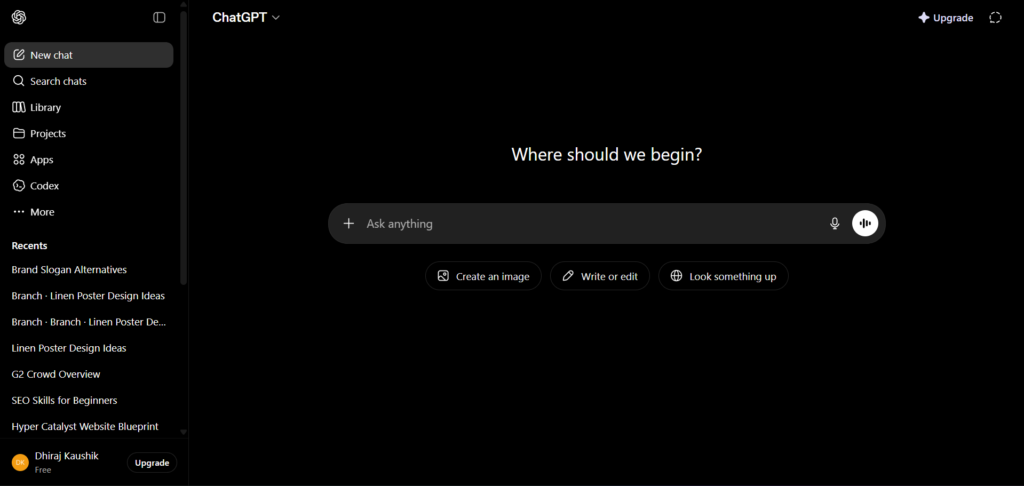
Both tools offer generous free tiers. ChatGPT Free gives limited access to GPT-5.4. Gemini Free provides Gemini 3.1 Flash, which is notably capable for everyday tasks. If you are not ready to pay, either free plan gives you a solid foundation to test the tool before committing
Who Should Use Gemini and Who Should Stick With ChatGPT?
You should choose Gemini if your daily work lives inside Google’s ecosystem. If you use Gmail, Google Docs, Drive, or Google Calendar as your primary work tools, Gemini integrates with all of them natively. The AI can read your emails, summarize meetings, draft documents, and manage your calendar directly inside the apps you already have open. ChatGPT cannot do this without third-party workarounds that add friction and do not work as reliably.
You should choose ChatGPT if writing quality is your top priority. Marketers, bloggers, copywriters, and content creators will consistently get better output from ChatGPT when the task requires tone matching, emotional nuance, or persuasive language. The difference is not dramatic, but it is consistent enough across dozens of writing tasks to matter if this is how you use AI every day.
Developers building products should look at both tools’ API pricing before committing to either. Gemini’s API is roughly 50% cheaper per token, which matters a great deal when you are processing millions of tokens per month. However, ChatGPT’s computer use capability opens up automation workflows that Gemini cannot yet replicate. The right choice depends on whether your product needs lower cost or more advanced agentic capabilities.
Students at American colleges and universities should note that Google AI Pro, which includes Gemini Advanced, is available free for verified students for one year. This makes Gemini the clear default choice for students who want a paid-tier AI tool without paying a dollar. ChatGPT offers no equivalent student program. A free year of Google AI Pro is a significant advantage worth claiming before it expires.
Frequently Asked Questions
Is Gemini better than ChatGPT in 2026?
Neither tool is universally better. Gemini wins on context window size, Google ecosystem integration, real-time search, multimodal input handling, and API cost. ChatGPT wins on writing quality, voice mode experience, computer use automation, the Custom GPTs marketplace, and Sora video generation. The right tool depends on your specific workflow. If you work primarily inside Google’s suite of apps, Gemini is the better default. If writing quality and ecosystem breadth matter more, ChatGPT has the edge. Many power users in the US use both tools for different tasks and find that they complement each other well.
What is the difference between Gemini and ChatGPT pricing in 2026?
Both tools offer a free tier and a mid-tier plan priced at approximately $20 per month. ChatGPT Plus costs $20 per month and includes GPT-5.4 access. Google AI Pro costs $19.99 per month and includes Gemini 3.1 Pro with a 1 million token context window and 2 terabytes of Google One storage. At the premium tier, ChatGPT Pro costs $200 per month while Google AI Ultra costs $249.99 per month. For API developers, Gemini is approximately 50% cheaper per token than ChatGPT across input and output pricing, which makes a significant difference at scale.
Can Gemini replace ChatGPT for writing tasks?
For most everyday writing tasks like emails, summaries, and simple reports, Gemini performs well and is a viable alternative to ChatGPT. However, for content creation that requires a natural human voice, strong tonal control, or creative originality, ChatGPT consistently produces better output in head-to-head testing. If your writing needs to carry real emotional weight or persuade a reader, ChatGPT remains the stronger choice in 2026. Gemini produces writing that is accurate and well-structured but slightly more formal and less adaptable in tone across different audience types.
Does Gemini work with Gmail and Google Docs?
Yes. Gemini integrates natively with Gmail, Google Docs, Google Drive, Google Sheets, Google Meet, and Google Calendar. On Google AI Pro, you can use Gemini directly inside Gmail to draft replies, summarize email threads, and compose new messages. Inside Google Docs, Gemini can help you write, edit, and reformat documents without leaving the interface. This level of native integration is Gemini’s strongest practical advantage over ChatGPT, which requires third-party connections to work with Google’s tools and does not offer the same seamless in-app experience.
Which AI has a bigger context window, Gemini or ChatGPT?
Gemini has a significantly larger context window. Gemini 3.1 Pro supports 2 million tokens, which is the largest context window among all frontier AI models in 2026. ChatGPT GPT-5.4 supports up to 1 million tokens through the API and 128K tokens for standard Plus conversations. In practice, Gemini’s larger context window means it can analyze longer documents, larger codebases, and longer conversation histories without losing track of earlier details. For anyone working with lengthy legal documents, full research reports, or complete codebases, this difference has a real and immediate impact on output quality.
Is ChatGPT or Gemini better for American students?
American college students should strongly consider Gemini because Google AI Pro, which includes Gemini Advanced with full access to Gemini 3.1 Pro, is available free for verified students for one year through Google’s student program. This is a paid-tier AI tool at no cost, and it is a significant advantage worth claiming before it expires. For students who need ChatGPT specifically for a course requirement or personal preference, the free ChatGPT tier with GPT-5.4 access is also solid. However, the free year of Gemini Pro makes Gemini the better value by a clear margin for eligible US students.
Final Thoughts
The gemini vs chatgpt comparison in 2026 is closer than it has ever been. Both tools score identically on the Artificial Analysis Intelligence Index. Both offer capable free tiers. Both are useful for the vast majority of everyday tasks that most people bring to AI. The choice between them is no longer about which one is smarter.
The real deciding factor is your ecosystem and your primary use case. If you live in Gmail and Google Docs, Gemini is the obvious choice. If you need the best possible writing output or the computer use feature for workflow automation, ChatGPT has the edge. Many US professionals who use AI heavily have settled on using both tools, keeping ChatGPT for writing and automation and Gemini for research, long documents, and anything that touches Google’s apps.
Start with the free tier of whichever tool fits your current workflow, test it for two weeks on real work tasks, and then decide whether the $20 paid plan makes sense. That is the most honest path to finding the right answer for your situation.
Internal Links
- Learn more about AI plans in our Perplexity AI Plans guide
- See how AI is transforming US workplaces
- Read our Google Stitch review and what it means for AI tools
External Links
- Google Gemini official site
- ChatGPT official site
- Artificial Analysis Intelligence Index
- Google AI Pro pricing
- OpenAI pricing page