ElevenLabs voice cloning is the single feature most responsible for the company’s reputation, and also the feature most likely to make a first-time user genuinely uneasy the moment they hear their own cloned voice say something they never actually said. This guide covers exactly how the technology works, how convincing it really is compared to the marketing claims, and the consent and safety questions that come with a capability this powerful.
Table of Contents
What Is ElevenLabs Voice Cloning?
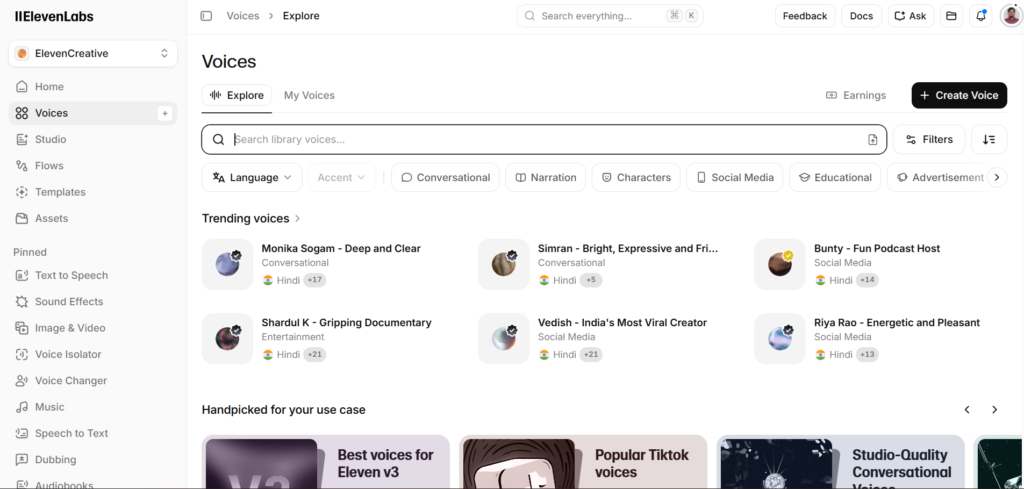
ElevenLabs voice cloning is a feature that analyzes a sample recording of a human voice and generates new speech in that same voice, saying words the original speaker never actually recorded. The technology comes in two distinct tiers, Instant Voice Cloning and Professional Voice Cloning, each built for a different level of fidelity and a different amount of effort required to set up.
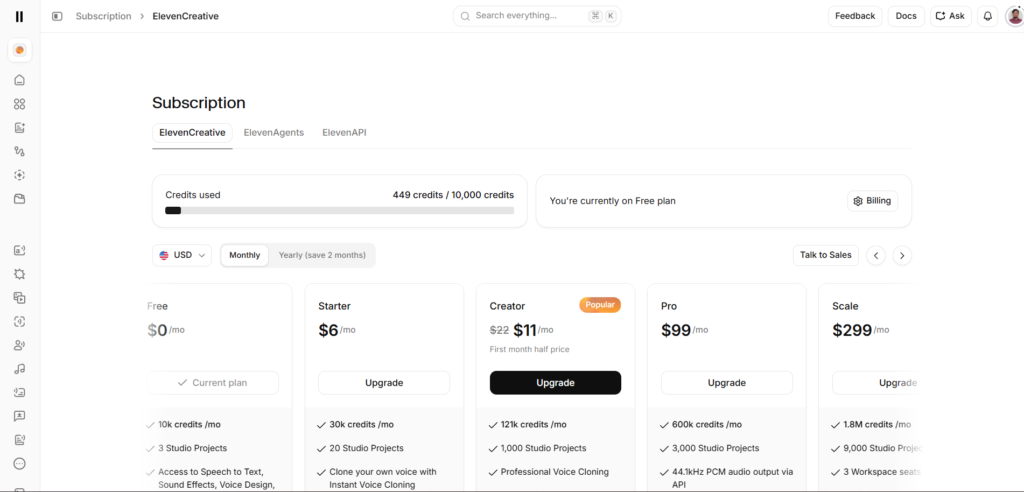
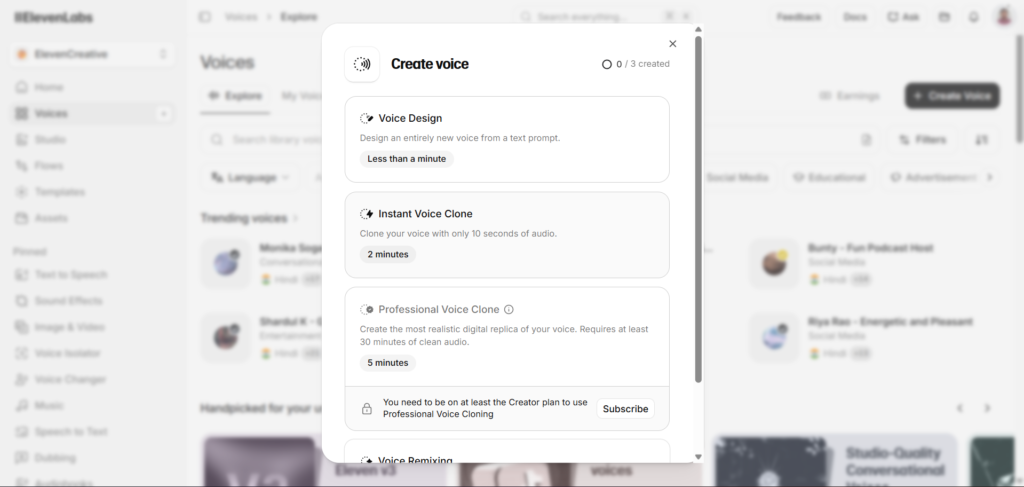
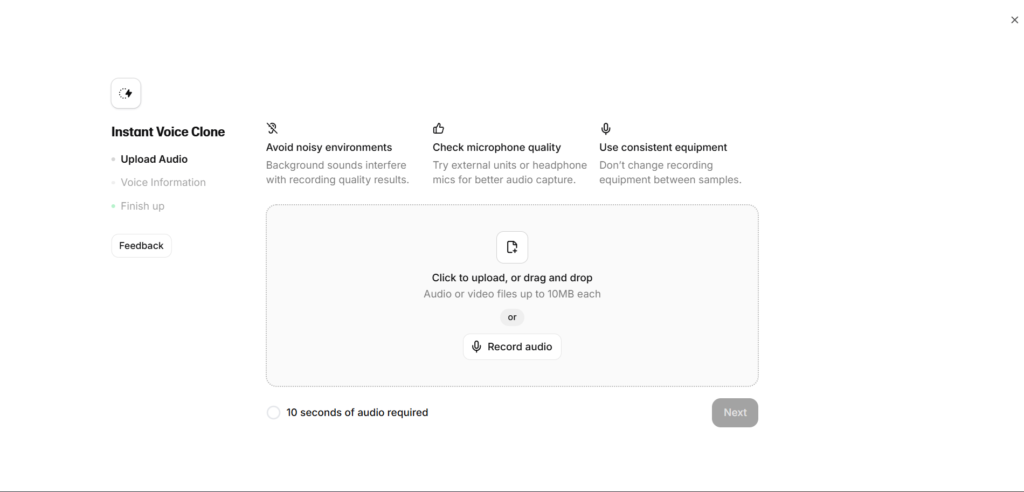
Instant Voice Cloning, available starting on the Starter plan, works from a relatively short sample, often as little as one to two minutes of clean audio, and produces a usable clone within moments of uploading. The tradeoff for this speed is quality, Instant clones capture the general character of a voice well but can carry subtle artifacts, an occasional unnatural cadence or a slightly flattened emotional range, especially noticeable on longer generated passages.
Professional Voice Cloning, unlocked on the Creator plan and above, requires a longer, more carefully recorded sample, sometimes following specific guided prompts designed to capture a fuller range of the speaker’s natural vocal patterns. The result is what ElevenLabs describes as a hyper-realistic digital twin, and in practice, Professional clones are frequently difficult to distinguish from the original speaker in casual listening, a genuinely different quality tier from Instant Cloning.
For the full picture of everything ElevenLabs offers beyond voice cloning specifically, our ElevenLabs Review 2026: 9 Honest Truths About the AI Voice Tool Everyone’s Cloning covers the complete product lineup, since cloning is one part of a much broader platform rather than the entirety of what the company builds.
Why Voice Cloning Became ElevenLabs’ Defining Feature?
Text-to-speech itself was not new when ElevenLabs launched, plenty of companies had offered synthetic voices for years before. What set ElevenLabs apart, and what continues to drive its reputation, was the combination of natural-sounding baseline speech with a cloning capability convincing enough to genuinely surprise first-time users. Hearing your own voice, or a familiar voice, say something it never actually said tends to leave a stronger impression than any amount of marketing copy could produce on its own.
This is also precisely why voice cloning specifically, rather than the broader text-to-speech category, tends to dominate conversations about the ethical implications of the technology. A synthetic voice reading a script is a tool. A convincing clone of a specific, identifiable human being is something closer to impersonation technology, and the distinction matters enormously for how the capability should be used and regulated going forward.
How ElevenLabs Voice Cloning Actually Works?
Understanding the mechanics behind voice cloning helps set realistic expectations for quality, and also clarifies exactly what consent requirements exist and why they matter as much as they do for a technology this capable.
The Underlying Process
Voice cloning works by analyzing the acoustic characteristics of a sample recording, pitch, tone, pacing, and specific pronunciation patterns, and using that analysis to generate new speech that matches those characteristics when given new text to read. This is fundamentally different from a simple pitch-shifting effect or audio filter, since the underlying model learns to generate genuinely new speech patterns consistent with the sample rather than manipulating pre-existing audio.
Consent Verification
ElevenLabs requires consent verification before allowing a user to clone a voice that is not demonstrably their own, typically through a recorded consent statement read in the voice being cloned. This system is designed to prevent the most obvious form of misuse, someone cloning a stranger’s or public figure’s voice without any authorization at all, though no automated verification system is entirely foolproof against determined bad actors.
Where the Quality Actually Comes From?
The gap in quality between Instant and Professional Voice Cloning comes down almost entirely to sample quality and length. A short, casually recorded sample gives the underlying model less material to learn from, resulting in a clone that captures the general shape of a voice without the finer details. A longer, cleaner, more varied sample, ideally recorded in a quiet environment with natural vocal variation across different emotional tones, gives the model significantly more to work with, which is why Professional Voice Cloning’s more demanding setup process produces a meaningfully better result.
Detecting AI Cloned Voices
As voice cloning technology has improved, so has interest in detection technology built to identify AI generated speech. Current detection tools generally work by identifying subtle statistical patterns and artifacts that remain even in high quality clones, patterns largely imperceptible to human ears but detectable through specialized analysis. This detection technology remains an active area of development precisely because the underlying cloning technology continues to improve at a comparable pace, an ongoing technical arms race worth being aware of if you are evaluating the reliability of any specific detection claim.
Some organizations, particularly banks and financial institutions increasingly concerned about voice-based fraud, have begun implementing their own layered verification approaches rather than relying purely on voice recognition alone, treating a voice match as one signal among several rather than sufficient proof of identity on its own. This shift reflects a broader, sensible response to a technology that has made voice-only authentication meaningfully less trustworthy than it was even a few years ago.
Step-by-Step Guide to Cloning a Voice on ElevenLabs
Here is how to actually set up a voice clone properly, whether you are cloning your own voice or, with proper authorization, someone else’s.
Step 1: Confirm You Have the Right Plan Tier
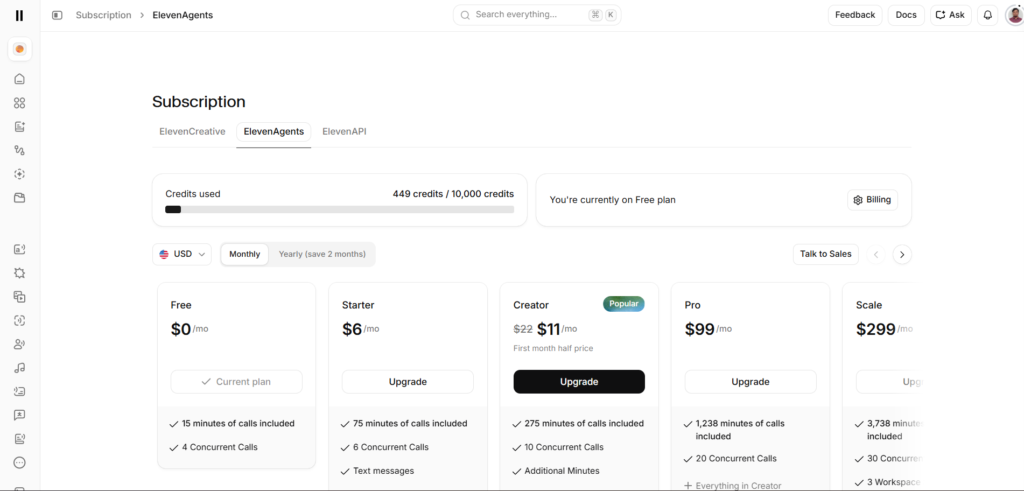
Instant Voice Cloning requires at least the Starter plan, while Professional Voice Cloning requires Creator or above. Confirm your current plan supports the specific cloning tier you need before attempting to set one up.
Step 2: Record a Clean Sample in a Quiet Environment
Background noise, echo, and inconsistent microphone distance all degrade clone quality noticeably. Record in a quiet room, ideally with some soft furnishing to reduce echo, and keep a consistent distance from your microphone throughout the recording.
Step 3: Include Natural Vocal Variation in Your Sample
Read your sample text with natural inflection rather than a flat, monotone delivery, including some variation in pace and emphasis. A sample that only captures one narrow emotional register produces a clone that struggles to sound natural when later asked to express a different tone.
Step 4: Complete the Required Consent Verification
For Instant Voice Cloning, you will typically need to read and record a specific consent statement confirming you have the right to clone the voice being uploaded. Complete this step accurately, since bypassing or falsifying consent verification violates ElevenLabs’ terms of service and carries real legal risk.
Step 5: Test Your Clone Across Different Types of Text
Before relying on your clone for a real project, test it across varied content, a calm narrative passage, an excited announcement, a technical explanation, to identify where it performs well and where it still sounds noticeably artificial.
Step 6: Consider Professional Voice Cloning If Instant Falls Short
If Instant Voice Cloning’s quality is not sufficient for your specific project, particularly for anything requiring long-form, emotionally varied narration, evaluate whether upgrading to unlock Professional Voice Cloning is worth the additional monthly cost for your use case.
Step 7: Keep Your Cloned Voices Organized and Access-Controlled
If you are managing multiple cloned voices, whether your own for different projects or, with authorization, other people’s voices for specific client work, keep clear records of consent documentation and restrict access to cloned voice profiles to only those who genuinely need them.
Key Benefits of ElevenLabs Voice Cloning
The most immediate benefit for individual creators is maintaining a consistent narrator voice across a long project without needing repeated studio recording sessions. A podcaster, audiobook narrator, or course creator can record a single high quality sample once and generate new content in that same voice indefinitely afterward, saving significant ongoing production time.
For businesses and accessibility applications, voice cloning offers a genuinely meaningful capability: giving a voice back to someone who has lost the ability to speak due to illness or injury, using recordings from before their condition changed. This application represents some of the most consequential, positive use of the technology, distinct from the more commonly discussed creative and commercial applications.
Professional Voice Cloning’s higher fidelity specifically benefits any use case where the clone needs to be genuinely convincing rather than merely serviceable, dubbing a video into another language while preserving the original speaker’s actual voice character, for example, a use case covered in more depth in our guide on ElevenLabs Dubbing Explained 2026: 5 Powerful Features That Beat Hiring a Studio.
The consent verification system, while not perfect, represents a genuine attempt to build responsible guardrails into a technology capable of real harm if left completely unrestricted. Comparing ElevenLabs’ approach against less careful competitors in the space is a reasonable part of due diligence for anyone choosing a voice cloning provider specifically for its safety practices, not just its output quality.
Beyond individual creators, voice cloning has opened up meaningful new possibilities for archiving and preservation work, capturing a family member’s voice while they are still able to record clean samples, or preserving a historical figure’s actual vocal character for educational content in a way that a generic narrator never could replicate.
Comparison Table
| Tool Name | Cloning Speed | Cloning Fidelity | Consent Verification | Monthly Cost |
|---|---|---|---|---|
| ElevenLabs | Instant (minutes) or Professional (longer setup) | Very high, especially Professional | Required for non-owner voices | Free, then $5 |
| Resemble AI | Fast, API-focused | High, enterprise-grade | Required, enterprise-managed | Custom pricing |
| Play.ht | Moderate | High | Required | Free, then $39 |
| Murf AI | Moderate | Good, more limited | Required | Free, then $29 |
| Descript Overdub | Moderate | Good | Required, own-voice focused | Included with Descript plans |
Pricing reflects publicly listed rates as of mid-2026. Voice cloning fidelity is inherently somewhat subjective and depends heavily on sample quality regardless of platform, so testing with your own actual sample audio is more reliable than trusting any single comparison table.
Who ElevenLabs Voice Cloning Actually Works Best For?
Podcasters and course creators producing regular long-form audio content benefit most directly from Instant Voice Cloning, since it eliminates the need for repeated recording sessions while maintaining a consistent, recognizable voice across dozens or hundreds of episodes.
Video creators localizing content for international audiences benefit specifically from Professional Voice Cloning paired with the Dubbing Studio, preserving a speaker’s actual vocal character across translated versions rather than replacing it with a generic voice actor, a workflow covered more fully in our dedicated dubbing guide.
Businesses and developers building accessibility tools represent a meaningful and often underappreciated use case, using voice cloning to preserve or restore a voice for someone affected by a condition that has impaired their natural speech, work that carries real personal significance beyond typical commercial applications.
Anyone considering cloning a voice that is not their own, for any purpose, should understand the legal and ethical stakes clearly before proceeding, since even with a consent verification system in place, the ultimate responsibility for obtaining genuine, informed permission rests with the person initiating the clone, not the platform itself.
FAQ
How realistic does ElevenLabs voice cloning actually sound?
Professional Voice Cloning frequently produces results that are genuinely difficult to distinguish from the original speaker in casual listening, particularly on shorter passages. Instant Voice Cloning is noticeably faster to set up but carries more detectable artifacts, an occasional unnatural cadence or flattened emotional range, especially on longer generated content. Actual quality depends heavily on the input sample’s recording quality and length, so results can vary significantly between two people using the same tier if one provides a much cleaner, more varied sample than the other, which is why testing with your own actual sample before committing to a full project remains the most reliable way to judge real-world quality.
Do I need permission to clone someone else’s voice on ElevenLabs?
Yes, ElevenLabs requires consent verification before cloning any voice that is not demonstrably your own, typically through a recorded consent statement in the voice being cloned. Bypassing or falsifying this verification violates ElevenLabs’ terms of service and can carry real legal consequences depending on your jurisdiction and how the resulting clone is used. Anyone considering cloning another person’s voice, even with informal verbal permission, should document that consent clearly and understand the specific legal landscape around voice rights in their relevant jurisdiction.
Can ElevenLabs clone my own voice from a short audio clip?
Yes, Instant Voice Cloning can produce a usable clone from as little as one to two minutes of clean audio, though quality improves noticeably with a longer, more varied sample. For your own voice specifically, no consent verification issue arises since you are the rights holder, but recording quality still matters significantly, background noise and inconsistent microphone distance both meaningfully degrade the resulting clone’s realism regardless of whose voice is being cloned.
Is there a way to detect if audio was generated using ElevenLabs voice cloning?
Detection technology for AI generated speech continues to develop, generally working by identifying subtle statistical patterns and artifacts imperceptible to human ears but detectable through specialized audio analysis tools. No detection method is currently considered completely reliable against high quality clones, and this remains an active area of ongoing research precisely because cloning technology continues improving at a comparable pace. Organizations concerned about voice cloning fraud specifically should look into dedicated audio forensics services rather than relying on casual listening alone to identify AI generated speech.
What happens if someone clones my voice without my permission?
Unauthorized voice cloning raises both platform-level terms of service violations and, depending on jurisdiction, potential legal claims related to right of publicity, fraud, or impersonation. If you discover your voice has been cloned without permission, documenting the specific instance and reporting it directly to the platform involved is a reasonable first step, alongside consulting with a legal professional if the unauthorized use has caused genuine harm, financial or reputational, to you specifically.
Can ElevenLabs voice cloning be used for phone scams or fraud?
The underlying technology has unfortunately been misused for exactly this purpose by bad actors, and voice cloning scams have become a documented, growing category of fraud tracked by law enforcement agencies. ElevenLabs’ consent verification system is specifically designed to prevent this kind of misuse on its own platform, though determined bad actors have found ways to circumvent similar safeguards across the broader voice cloning industry. Being aware that voice cloning fraud exists as a real threat, and treating unexpected, urgent phone requests from a “familiar” voice with appropriate skepticism, such as verifying through a separate communication channel before acting on any urgent financial request, is a reasonable precaution regardless of which specific platform’s technology might be involved in a given scam attempt.
Final Thoughts
ElevenLabs voice cloning represents a genuine technical achievement, capable of producing results that are, at its best tier, nearly indistinguishable from the actual human voice being cloned. That same capability is exactly why the consent and safety questions surrounding it deserve serious attention rather than being treated as a minor footnote to an otherwise straightforward creative tool.
For anyone using the technology as intended, cloning their own voice or a voice they have explicit, documented permission to use, the practical benefits are substantial: consistent narration without repeated studio time, meaningful accessibility applications, and genuinely useful dubbing and localization capabilities.
The responsibility for using this technology ethically ultimately sits with the person initiating the clone, not solely with the platform’s built-in safeguards. Treat any voice cloning capability, from ElevenLabs or any competitor, with the same seriousness you would apply to any technology capable of convincingly impersonating a real person.
As the technology continues to improve, expect the surrounding conversation about consent, detection, and regulation to keep evolving alongside it. What counts as adequate safeguards today will likely look different within another year or two, making it worth periodically revisiting a platform’s current policies rather than assuming the rules you learned when you first signed up still apply unchanged.
External Links:
- https://elevenlabs.io/voice-cloning
- https://elevenlabs.io/pricing
- https://elevenlabs.io/docs
- https://www.ftc.gov/news-events/contests/ftc-voice-cloning-challenge
- https://www.ic3.gov
- https://www.sagaftra.org
- https://www.ftc.gov/consumer-alerts
- https://www.consumer.ftc.gov/features/scam-alerts
- https://www.resemble.ai
- https://www.descript.com/overdub