ElevenLabs vs Murf is a genuine head-to-head comparison, unlike some of the other AI audio matchups that get search volume despite comparing tools built for entirely different purposes. Both are text-to-speech platforms competing for the same general use case, voiceover for videos, presentations, and content. After testing both on identical scripts, the real differences come down to voice quality, team workflow features, and how each platform is actually built for its target user.
Table of Contents
What Is the ElevenLabs vs Murf Comparison About?
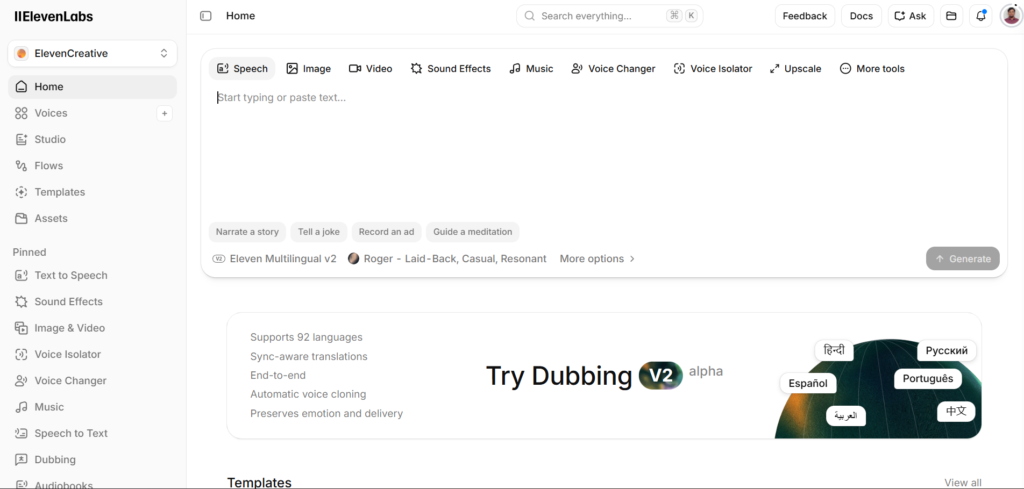
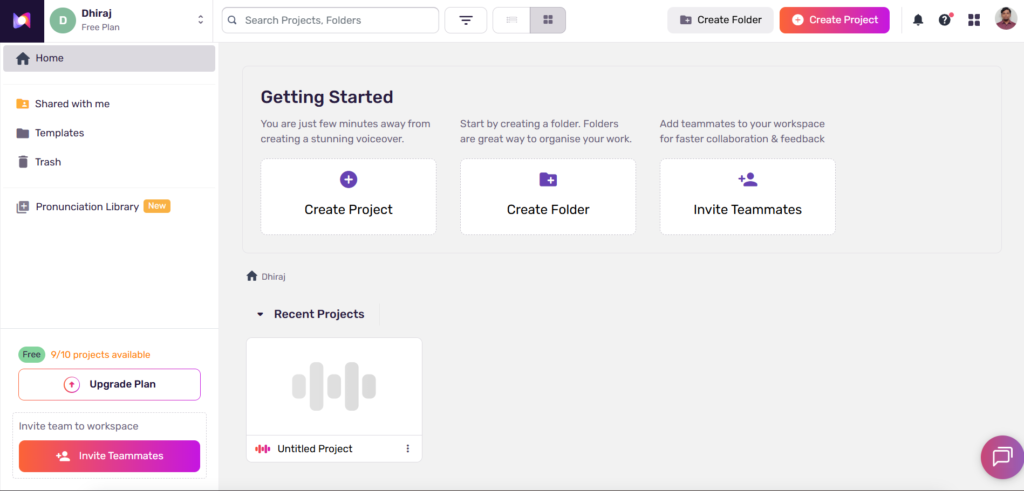
Both ElevenLabs and Murf are AI voice generation platforms that convert written text into spoken audio, but they were built with meaningfully different core users in mind. ElevenLabs emerged from a focus on pushing voice realism and cloning fidelity as far as possible, appealing strongly to individual creators, developers, and anyone prioritizing raw voice quality above all else. Murf built its platform more explicitly around team collaboration and a studio-style editing experience, appealing more to marketing teams, corporate training departments, and businesses producing voiceover at an organizational rather than individual scale.
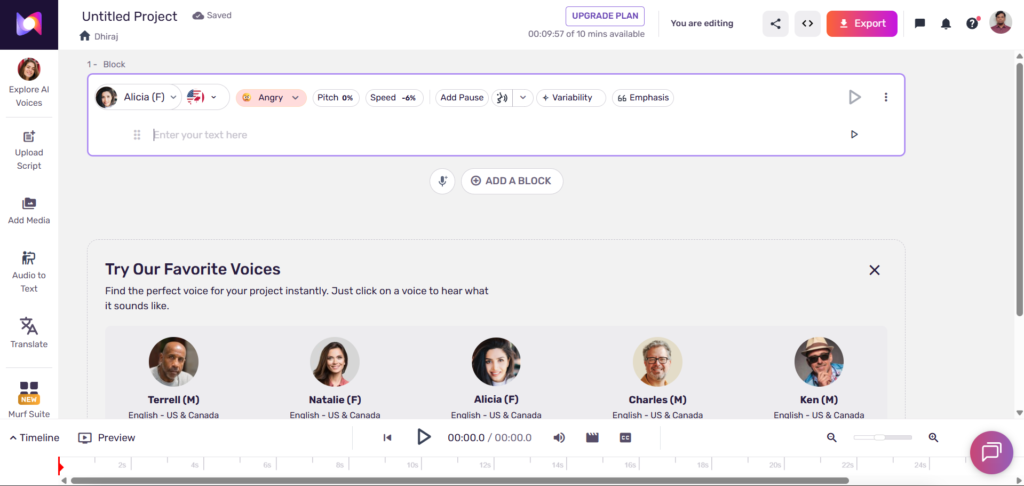
This difference in origin and target user shows up clearly once you actually use both platforms rather than just comparing feature lists. ElevenLabs’ interface centers around generating and iterating on audio quickly, with voice cloning as a headline capability. Murf’s interface centers around a more traditional editing timeline, letting users adjust pacing, add background music, and collaborate with team members within a single project workspace more directly than ElevenLabs’ more streamlined generation-focused approach.
For readers wanting the complete picture of what ElevenLabs offers beyond this specific comparison, our ElevenLabs Review 2026: 9 Honest Truths About the AI Voice Tool Everyone’s Cloning covers the full platform in depth.
Why This Comparison Is a Genuine One?
Unlike some AI audio comparisons that get search volume despite comparing fundamentally unrelated tools, ElevenLabs and Murf genuinely compete for the same customer in many cases. Both are marketed toward businesses and creators specifically seeking text-to-speech for video, e-learning, and marketing content, and both offer comparable core functionality, generating spoken audio from written text.
The meaningful differences show up not in whether each tool can perform the basic task, both clearly can, but in how each has chosen to build out the surrounding experience, voice realism and cloning depth for ElevenLabs, collaborative editing and team workflow for Murf. Understanding which of these two directions matters more for your specific situation is really the entire decision.
How ElevenLabs and Murf Actually Differ?
Understanding the practical differences between these two platforms requires looking past the surface-level similarity of “both do text-to-speech” and into how each is actually structured for real use.
Voice Quality and Realism
ElevenLabs generally produces more natural, emotionally varied speech, particularly noticeable on longer passages where subtle intonation changes matter for keeping a listener engaged. This voice quality advantage is widely acknowledged even among Murf’s own user base, and it reflects ElevenLabs’ foundational focus on pushing voice realism specifically as its core differentiator from the start. Murf’s voices are solid and professional sounding but tend to carry a slightly more consistent, occasionally flatter delivery across longer generated content compared to ElevenLabs’ output.
Voice Cloning Capability
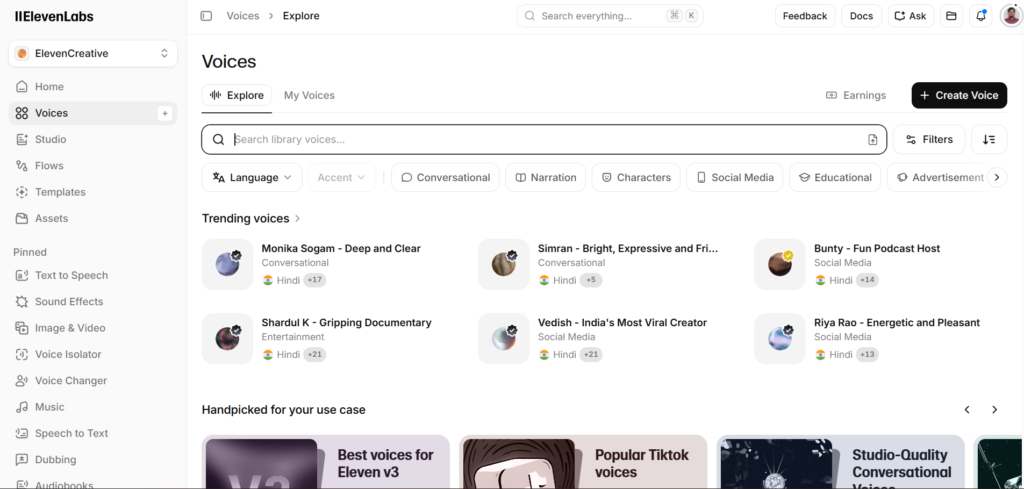
ElevenLabs offers significantly more sophisticated voice cloning, with both Instant and Professional tiers producing results that can closely match a specific individual’s voice, a capability covered in full depth in our dedicated guide on ElevenLabs Voice Cloning 2026: 7 Unsettling Truths About How Real It Sounds. Murf offers more limited voice cloning capability, generally less convincing for closely replicating a specific individual’s exact vocal character compared to ElevenLabs’ more advanced cloning technology.
Editing and Collaboration Features
Murf’s studio-style editor is a genuine advantage for team-based workflows, offering a more traditional timeline interface where multiple team members can collaborate on a single project, adjust pacing visually, and layer in music and other audio elements more directly within the platform itself. ElevenLabs’ interface is more streamlined toward generation and iteration, generally requiring users to export audio into a separate video or audio editor for the kind of detailed post-production work Murf handles more natively.
This difference reflects two genuinely different assumptions about the typical user’s workflow. Murf assumes users likely already have, or want, a full production environment within one tool. ElevenLabs assumes users likely already have an established video or audio editing workflow and simply need the highest quality voice generation to feed into that existing process, rather than a complete standalone production suite.
Pricing Structure
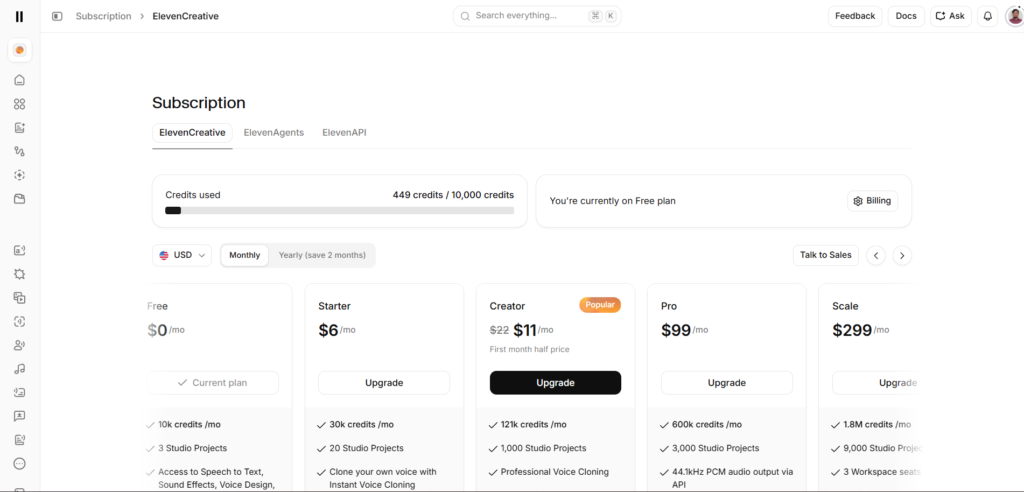
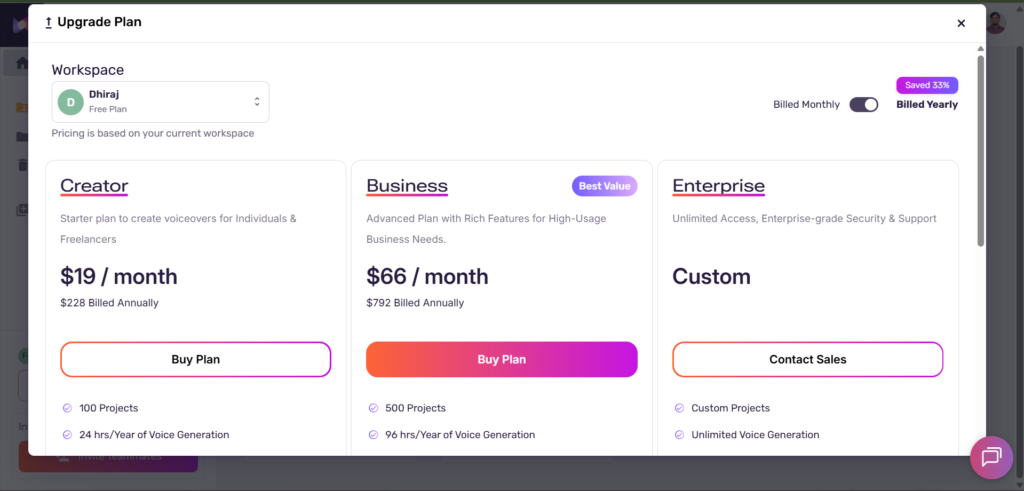
ElevenLabs uses a character-based credit system across its tiers, starting around $5 monthly for Starter. Murf uses a different pricing structure, generally starting higher, around $29 monthly for its entry paid tier, reflecting its more team and business-oriented positioning compared to ElevenLabs’ broader range including a genuinely low-cost individual entry point.
Step-by-Step Guide to Choosing Between Them
Here is how to actually test both platforms against your specific real use case rather than relying purely on feature comparisons.
Step 1: Test Both on the Exact Same Script
Use both platforms’ free tiers to generate audio from the exact same script, ideally one representative of your actual typical content length and style, rather than a generic sample sentence that will not reveal meaningful quality differences.
Step 2: Evaluate Voice Quality on Longer Passages Specifically
Short samples often sound similar across most modern voice AI tools. Test both platforms specifically on a longer passage, a few minutes of continuous narration, to reveal how each handles sustained pacing and emotional variation over time.
Step 3: Consider Your Team Collaboration Needs
If your work involves multiple people collaborating on the same voiceover project, test Murf’s studio editing and collaboration features specifically, since this is an area where Murf’s design genuinely outperforms ElevenLabs’ more individual-focused workflow.
Step 4: Test Voice Cloning if It Matters for Your Project
If maintaining a consistent, specific voice identity across content matters, particularly your own voice or a specific brand voice, test ElevenLabs’ voice cloning specifically, since this is where the gap between the two platforms is most pronounced.
Step 5: Compare Real Cost Against Your Actual Usage Volume
Calculate expected monthly cost for both platforms based on your actual anticipated usage volume, rather than comparing only the headline entry-tier price, since the two platforms’ pricing structures scale differently as usage grows.
Step 6: Weigh Editing Workflow Preference Directly
If you prefer working entirely within one platform for both generation and post-production editing, Murf’s more integrated studio experience may save workflow friction compared to ElevenLabs’ generation-then-export approach requiring a separate editing tool.
Key Benefits of Each Platform
ElevenLabs’ core benefit is voice quality and cloning sophistication that consistently outperforms Murf in direct listening comparisons, particularly for longer, more emotionally varied content where subtle vocal nuance matters most for audience engagement and perceived professionalism.
Murf’s core benefit is a more complete, integrated production workflow for teams, reducing the need to export generated audio into a separate editing tool for pacing adjustments, background music, and collaborative review, all handled more natively within Murf’s own studio interface.
ElevenLabs’ lower entry-tier pricing, starting around $5 monthly compared to Murf’s roughly $29 monthly entry point, benefits individual creators and smaller budget projects specifically, making it meaningfully more accessible for solo creators just starting to incorporate AI voiceover into their workflow.
Murf’s team-oriented feature set, including collaborative editing and a more structured project management approach, benefits marketing departments and corporate training teams specifically, where multiple stakeholders typically need to review and adjust voiceover content before final approval, a workflow ElevenLabs was not originally built to support as directly.
Both platforms benefit from ongoing competitive pressure pushing continuous improvement in their respective focus areas. ElevenLabs continues refining voice realism and expanding cloning capability, while Murf continues building out its collaborative editing and studio features, meaning the specific gap between the two on any given dimension is worth periodically reassessing rather than assuming today’s comparison holds indefinitely as both companies keep developing.
Comparison Table
| Tool Name | Voice Quality | Voice Cloning | Team Collaboration | Monthly Cost |
|---|---|---|---|---|
| ElevenLabs | Very high, natural and varied | Advanced, Instant and Professional | Limited, individual-focused | Free, then $5 |
| Murf AI | Good, professional and consistent | Basic, more limited | Strong, studio-style editor | Free, then $29 |
| Play.ht | High, API-first | Good | Limited | Free, then $39 |
| WellSaid Labs | High, enterprise-focused | Limited, brand voice focus | Moderate | Custom, enterprise pricing |
| Amazon Polly | Moderate, reliable | Very limited | None | Usage-based |
Pricing reflects publicly listed rates as of mid-2026. Murf’s higher entry cost reflects its more business and team-oriented feature set, while ElevenLabs’ lower entry point and higher-end cloning capability reflect its focus on individual creators and voice realism specifically.
Who Should Choose ElevenLabs vs Murf?
Individual creators, podcasters, and solo YouTubers prioritizing voice quality and needing a low-cost entry point should generally choose ElevenLabs, particularly if voice cloning to maintain a consistent personal or channel voice identity matters for their content.
Marketing teams and corporate training departments producing voiceover collaboratively across multiple stakeholders tend to find Murf’s studio-style editing and team workflow features genuinely worth the higher entry cost, since the integrated production environment reduces friction that would otherwise require juggling ElevenLabs’ output through a separate editing platform.
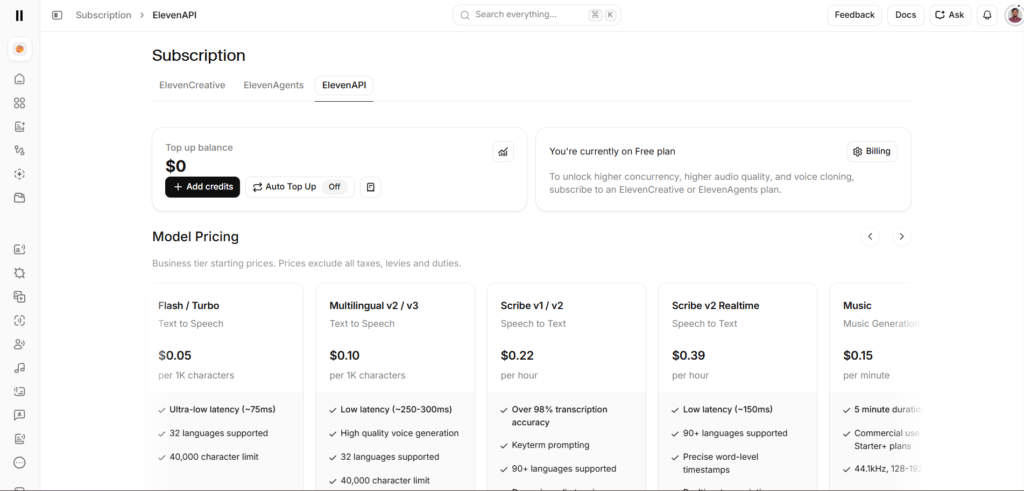
Developers and businesses building voice features directly into their own products should generally lean toward ElevenLabs, given its more mature and extensively documented API ecosystem, covered in full in our guide on ElevenLabs API 2026: The Complete Guide Developers Wish They Had on Day One.
Businesses specifically needing frequent, ongoing collaborative review cycles on voiceover content, corporate e-learning modules requiring stakeholder sign-off, for example, are likely better served by Murf’s built-in collaboration tools than by ElevenLabs’ more generation-focused, individually oriented workflow.
FAQ
Is ElevenLabs better than Murf for voice quality?
Yes, in direct comparisons ElevenLabs generally produces more natural, emotionally varied speech, particularly noticeable on longer passages, and this quality gap is widely acknowledged even among users who otherwise prefer Murf’s collaborative editing features. Murf’s voices remain solid and professional sounding for many standard business use cases, but ElevenLabs’ underlying voice generation technology consistently outperforms it in blind listening comparisons focused purely on realism and natural intonation.
Is Murf better than ElevenLabs for team projects?
Generally yes, Murf’s studio-style editor and built-in collaboration features are specifically designed for team-based voiceover production, letting multiple stakeholders review and adjust a project within one integrated workspace. ElevenLabs was built with a more individual, generation-focused workflow in mind, meaning teams using it typically need to export generated audio into a separate editing tool for the kind of collaborative post-production work Murf handles more natively within its own platform.
Which is cheaper, ElevenLabs or Murf?
ElevenLabs has a significantly lower entry-tier price, starting around $5 monthly compared to Murf’s roughly $29 monthly entry point, making ElevenLabs the more accessible option for individual creators or smaller budget projects specifically. However, cost comparisons should account for actual feature needs rather than price alone, since Murf’s higher entry cost reflects genuinely different, team-oriented functionality that ElevenLabs’ lower tiers do not include.
Can I clone my voice on Murf like I can on ElevenLabs?
Murf offers voice cloning, but it is generally considered less sophisticated and less convincing than ElevenLabs’ Instant and Professional Voice Cloning options, particularly for closely replicating a specific individual’s exact vocal character. Creators specifically prioritizing high-fidelity voice cloning as a core requirement should lean toward ElevenLabs, where this capability represents one of the platform’s most developed and widely recognized strengths.
Does Murf have an API like ElevenLabs?
Murf does offer API access for developers, though ElevenLabs’ API ecosystem is generally considered more mature, more extensively documented, and more widely adopted across the developer community building voice-enabled applications. Developers evaluating both specifically for API integration purposes should review both platforms’ current documentation directly, since API capabilities and documentation quality can shift meaningfully as either company continues developing their respective developer offerings.
Which platform is better for a small YouTube channel just starting out?
For a small, individual YouTube channel just starting to incorporate AI voiceover, ElevenLabs generally makes more sense given its significantly lower entry cost and stronger voice quality, both factors that matter more for a solo creator than Murf’s team collaboration features, which provide little value without an actual team to collaborate with. As a channel grows and potentially adds team members handling different aspects of production, Murf’s collaborative features become more relevant to reconsider.
Final Thoughts
ElevenLabs vs Murf represents a genuine choice between two platforms built around different priorities rather than one clearly superior option across every use case. ElevenLabs wins decisively on voice quality and cloning sophistication, while Murf wins on team collaboration and integrated editing workflow, two different sets of strengths that matter more or less depending on whether you are an individual creator or part of a team producing voiceover collaboratively.
The pricing gap between the two platforms’ entry tiers reflects this same difference in positioning, with ElevenLabs’ lower cost reflecting its individual creator focus and Murf’s higher cost reflecting genuinely different, team-oriented functionality rather than simply charging more for a comparable product.
Neither platform is objectively wrong for any given user, and the most common mistake in this comparison is choosing based on brand recognition or price alone rather than actually testing both against a real, representative piece of your own content first.
Test both on your actual real content, ideally something longer than a quick sample sentence, and weigh voice quality against collaboration needs based on how your specific workflow actually operates rather than picking based on price or brand recognition alone.
External Links: