Suno AI commercial use is one of the most misunderstood topics in the entire AI music space, and the confusion is not the creator’s fault. Suno’s own website tells you that paid subscribers can distribute music and keep 100 percent of royalties. The US Copyright Office tells you that AI-generated audio is not copyrightable. Both statements are true at the same time, and they answer completely different questions. This guide untangles the two.
Table of Contents
What Commercial Use Actually Means on Suno?
Suno AI commercial use comes down to a single distinction that most creators never stop to understand properly: commercial rights and copyright are not the same thing, and Suno grants one of them while US law withholds the other.
Commercial rights mean Suno, as the company, will not sue you for selling or distributing the music you generate on a paid plan. The platform explicitly grants this in its Terms of Service, and it is real and enforceable. Copyright means you can sue a third party for stealing or copying your music. That second protection is where the problem begins.
The US Copyright Office’s current position, upheld consistently through 2026, is that purely AI-generated works cannot be registered for copyright. If you generate a track by typing a prompt into Suno and clicking Create, with no additional human authorship on your part, the resulting audio has no copyright owner under US law. Nobody owns it, including you.
What this means practically is that if someone lifts your Suno track and re-uploads it to YouTube or Spotify under their name, your legal options are extremely limited unless you added meaningful human-authored elements on top of the generated output, such as original lyrics you wrote yourself, a live instrument performance, or significant arrangement edits. The commercial rights Suno grants protect you from Suno itself claiming a cut of your revenue. They do not create a shield against the rest of the world.
The key distinction most people miss is that commercial rights mean Suno will not sue you for selling the song, while copyright means you can sue someone else for stealing it. Suno grants the first. US law may not grant the second for purely AI-generated output.
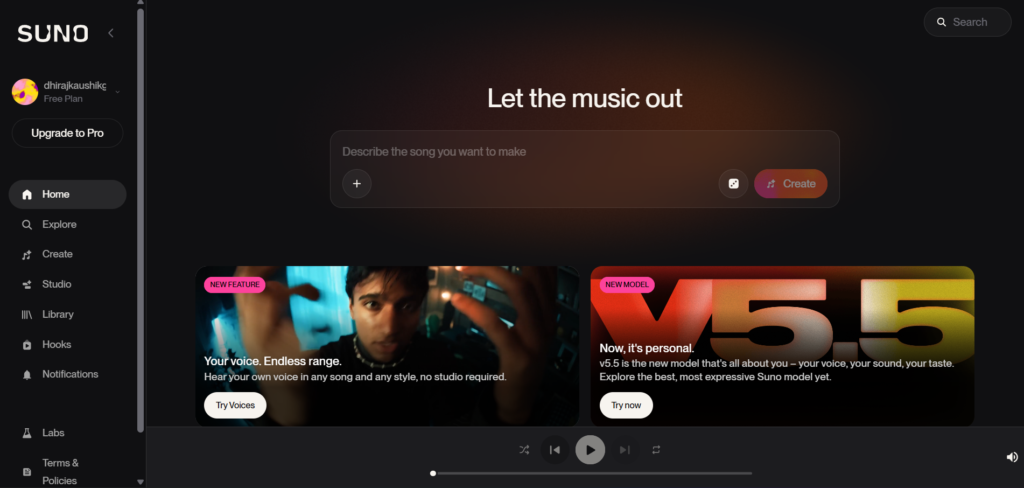
How Suno AI Commercial Rights Actually Work?
Understanding the rights structure requires looking at three separate layers: what your subscription plan gives you, what the recent Warner Music settlement changed, and where the ongoing Sony lawsuit leaves things in mid-2026.
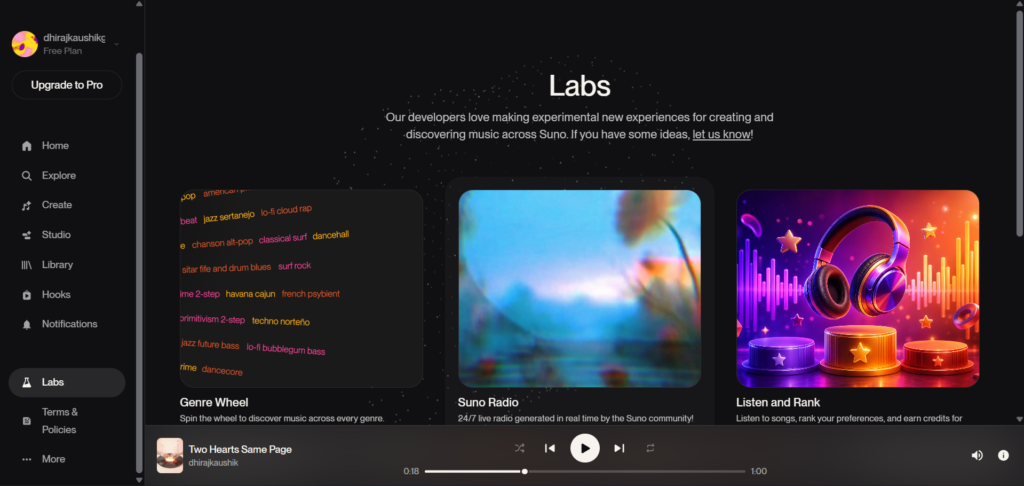
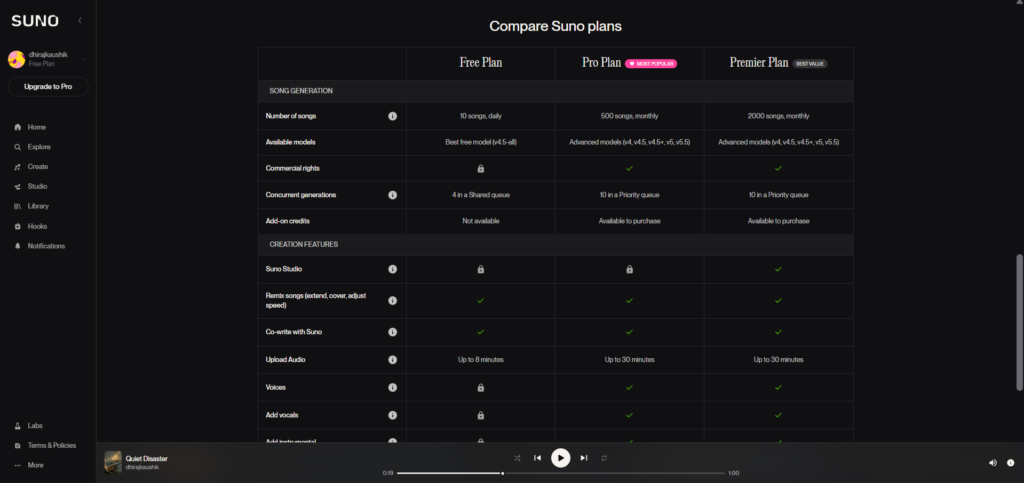
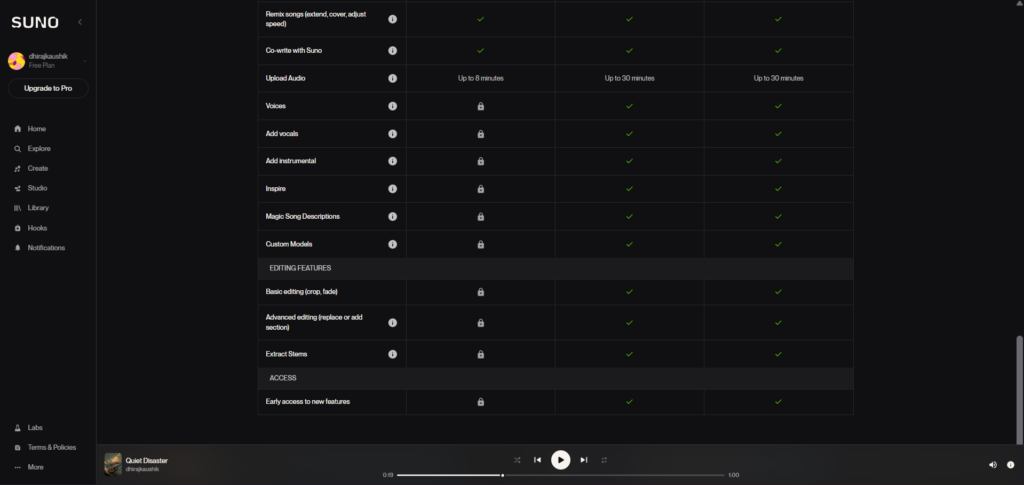
The subscription plan layer. The free tier gives you nothing commercially. Anything generated on a free account is for personal, non-commercial use only. You cannot upload these to streaming services, use them in monetized YouTube videos, or sell them. On Pro and Premier, Suno grants you a perpetual commercial license to exploit the output, meaning you keep 100 percent of royalties, Suno takes zero percent, and you can distribute through any streaming platform that accepts AI content. Crucially, even as a paid subscriber, Suno technically remains the author of the audio, while you are granted a perpetual license to exploit it commercially. The ownership language was deliberately removed from Suno’s terms following the Warner Music settlement in late 2025.
The Warner Music settlement layer. In November 2025, Suno reached a $500 million settlement with Warner Music Group that allows Suno to train on the WMG catalog and gives WMG control over aspects of AI likeness, copyright, and user-created music. As a result, Suno is replacing older pre-settlement models with new licensed versions in 2026. Output from the new licensed models is on cleaner legal ground for commercial release than output from pre-settlement models. Output from the pre-settlement models is in legal limbo and may face takedowns if a copyright owner identifies a stylistic match.
The Sony lawsuit layer. In a motion filed May 21 in the Massachusetts court, the labels asked Chief Judge Saylor to allow them to expand their complaint from 560 works to 61,026 specifically identified recordings, which they described as only a small fraction of the total matches. A key summary-judgment hearing in that case is scheduled for July 2026. None of these lawsuits target individual Suno users. They target Suno the company for its training practices. As a creator, your commercial rights under Suno’s paid plans are separate from the question of whether Suno’s training data was legally acquired. However, if Suno loses badly and is forced to shut down or change its model fundamentally, platform availability itself could be affected.
What this means for your inputs. When you submit prompts, audio, or a voice model to Suno, you grant a broad license that includes using your inputs to train Suno’s models. If you upload original audio or write original lyrics, those inputs become part of Suno’s training pool under the current terms. For creators who want to retain full control over their own creative material, this is worth reading carefully before uploading anything of real value.
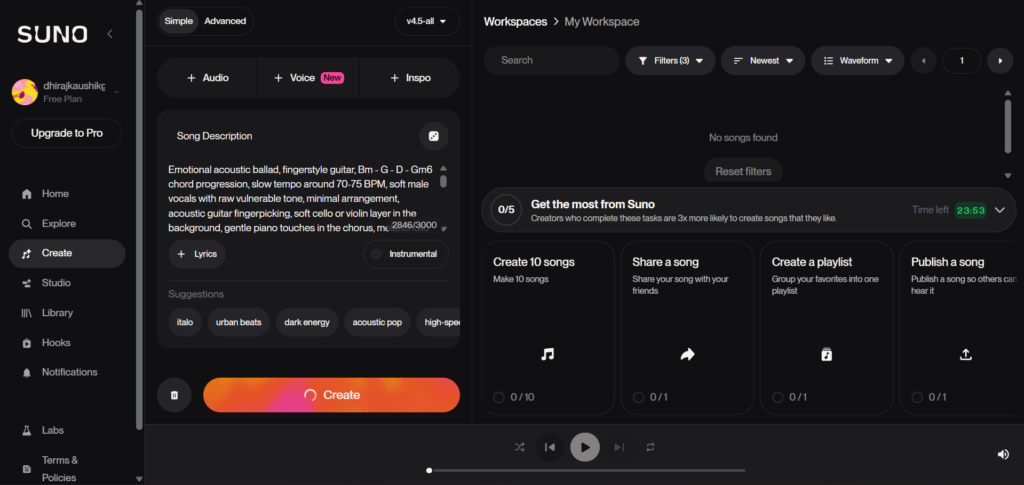
Step-by-Step: How to Publish Suno Music the Right Way?
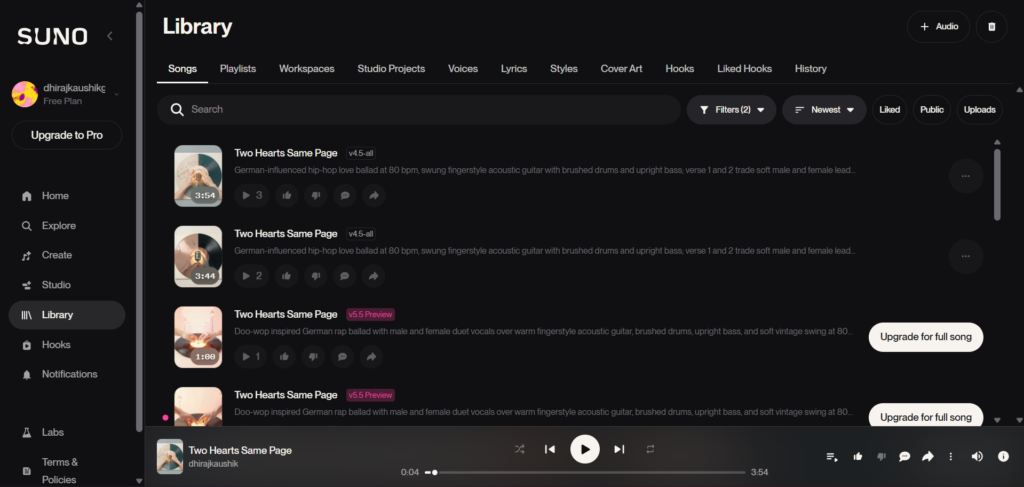
Step 1: Confirm You Are on a Paid Plan Before Generating Anything You Intend to Publish
Commercial rights on Suno are tied to your active subscription status at the time of generation, not at the time of distribution. Commercial rights survive cancellation for every song generated while you were paid. So if you generate a track on Pro in June, your commercial rights to that track remain valid even if you cancel in July. But anything generated during a free period carries no commercial rights, ever, regardless of what you upgrade to afterward.
Go to suno.com/account and confirm your current plan tier shows Pro or Premier before creating anything you intend to release commercially.
Step 2: Add Human Authorship Wherever You Can
This is the single most important legal upgrade you can give any Suno-generated track, and it costs nothing except a small amount of time.
User-written lyrics are copyrightable as a literary work regardless of how the music around them is generated. This is the single most important legal upgrade you can give a Suno song, and it is the difference between ownership in name only and a composition that can collect PRO royalties, be registered at the Copyright Office, and be accepted by distributors who reject 100 percent AI content.
Write your own lyrics in Custom Mode and type them into the lyrics field before generating. Add a spoken word section in your own voice. Record a real instrument over the generated backing track. Any meaningful human contribution creates a copyrightable element on top of the AI-generated base.
Step 3: Disclose AI Involvement to Your Distributor
Starting in late 2025, Spotify and Apple Music began enforcing the DDEX Industry Standard for AI disclosure. If you distribute through DistroKid, TuneCore, or similar services, look for the AI content checkbox or disclosure field during your upload process and tick it honestly.
Distributors have tightened their AI policies through 2025 and 2026. Verify your distributor’s current AI policy before uploading any AI-generated or AI-assisted music. Policies are evolving fast. Uploading without disclosure when your distributor requires it risks having your tracks removed and your account flagged.
Step 4: Keep Records of Every Generation
Download your tracks immediately after generating them. Store the original Suno output file, your prompt text, your lyrics if you wrote them, and the date of generation. This paper trail matters if a distributor or platform ever challenges the rights status of a specific track. It also serves as evidence of which model tier you were using when you generated, which becomes important if pre-settlement model outputs face scrutiny in the wake of the Sony ruling.
Step 5: Register Any Human-Authored Elements Separately
If you wrote original lyrics, register the composition with your Performing Rights Organization, ASCAP, BMI, or SESAC in the US. This registration is for the human-authored elements only, the lyrics or arrangement, not for the AI-generated audio itself. But it is the mechanism that enables you to collect publishing royalties from streaming platforms and sync licensing, which a pure AI-only track cannot access in the same way.
Key Benefits of Suno’s Commercial Rights for Creators
You keep every dollar of revenue without platform cuts. Suno takes zero percent royalty on any music generated by paid subscribers. Every cent from streaming, sync licensing, YouTube ad revenue, and direct sales goes to you. This stands in meaningful contrast to traditional publishing arrangements, where a label or publisher typically takes 50 percent or more of generated royalties in exchange for distribution and promotion. For an independent creator who wants full financial control over their catalog, this zero-royalty-cut model is practically significant.
Commercial rights survive if you cancel your subscription. Many creators assume their distribution rights would disappear the moment they stop paying for Suno. They do not. Songs generated during an active paid period carry their commercial license permanently, regardless of whether you renew. This means you can generate a large catalog of tracks during a single month of Premier, cancel, and still distribute and monetize those tracks indefinitely after. It removes the pressure to maintain an active subscription purely to preserve previously earned commercial rights.
The Warner-licensed models reduce your distribution risk. Output from Suno’s newer licensed models, which are rolling out through 2026 following the Warner Music settlement, is on cleaner legal ground for commercial release than the pre-settlement output. As Suno phases out older models and replaces them with Warner-licensed versions, the tracks you generate going forward sit on more stable ground than the tracks generated before November 2025, even if the Sony matter is not yet fully resolved. Choosing current model versions over any legacy options reduces your exposure to the specific outputs that are under scrutiny in the active litigation.
The human-authorship upgrade path is practical and accessible. The gap between “no copyright protection” and “meaningful copyright protection” on a Suno track is smaller than most creators realize. Writing your own lyrics in Custom Mode before generating is something any creator can do in five minutes, and it creates a copyrightable literary work on top of the AI-generated base. That one addition opens up PRO registration, stronger distributor acceptance, and a real legal basis for infringement claims if someone steals your work. The upgrade path exists, it works, and it costs nothing beyond the time to write original words.
Comparison Table: AI Music Platforms and Commercial Rights
| Platform | Standout Feature | Copyright Status | Export Available | Monthly Cost |
|---|---|---|---|---|
| Suno (Pro/Premier) | Vocal-led full songs, zero royalty cut | Commercial license granted, no copyright guarantee | Yes, with monthly caps | $8-10 / $24-30 |
| Udio | Instrumental fidelity, clean label deals | Commercial license, same copyright uncertainty | No, walled garden since Oct 2025 | $10-30 |
| AIVA | Instrumental composition, PRO registration pursued | Copyright registration attempted, instrumental focus | Yes | Free / paid tiers |
| Mubert | Licensed artist catalog, cleanest legal story | Commercial license, training data licensed | Yes | Subscription varies |
| Boomy | Built-in Spotify distribution pipeline | Weaker copyright claim, distribution built in | Yes | Free / paid tiers |
Mubert is the platform with the cleanest current legal story for commercial use, since it licenses from a curated pool of consenting artists rather than training on the open internet. If your work involves high-stakes commercial projects where legal exposure is a genuine concern, Mubert’s trained-on-licensed-content architecture is worth serious consideration even though its vocal output cannot match Suno’s. For a deeper look at how Suno compares against Udio specifically on audio quality and the practical implications of Udio’s walled garden, our Suno vs Udio comparison covers both platforms in detail.
Who Is This Guide For?
YouTube creators and podcasters publishing regularly. If you are producing content on a weekly or daily schedule and need background music that will not trigger copyright claims, Suno’s Pro plan at $8 to $10 per month is a practical, affordable solution. Suno-generated music is not registered in any Content ID database, which means it will not automatically generate a copyright claim on YouTube the way licensed commercial music can. Paired with the commercial rights granted on Pro, this makes it a reasonable fit for monetized creator content as long as you disclose AI involvement to your distributor and keep records of your generation history.
Independent musicians using Suno as a composition tool. The most legally defensible and creatively fulfilling use of Suno is as a starting skeleton, not a finished product. Generate a chord progression and arrangement in Suno, export the MIDI or stems via Premier’s Studio, and build from there with real instruments and human performance. Professional 2026 producers are using Suno as a reference track engine. They generate the vibe in Suno, then use the MIDI or stems available in the Premier plan to re-record the parts with human session players. This human-in-the-loop process creates a legally defensible copyright that you actually own. If you want to understand the stem and MIDI tools that make this workflow possible, our Suno Studio review covers exactly what the Premier-tier editing environment can and cannot do.
Agencies and brands producing commercial campaigns. This is the use case that requires the most caution and the most specific legal advice before proceeding. The ongoing Sony lawsuit, the expanded complaint now covering 61,026 recordings, and the unresolved fair-use question all create real, non-trivial legal exposure for organizations with significant commercial stakes or legal departments that need defensible IP chains. Risk-averse creators wait, or use Suno Enterprise for indemnification. If your project has a large distribution footprint, a brand association with a major company, or a sync licensing component, consulting a qualified entertainment attorney before releasing Suno-generated music commercially is the appropriate step, not just a boilerplate disclaimer.
Hobbyists and bedroom musicians exploring AI creation. If you are generating music purely for personal enjoyment, to experiment with AI tools, or to share with friends without any monetization involved, the free plan works fine, and none of the legal complexity above applies to you at all. The commercial rights question only becomes relevant when money enters the picture.
FAQ
Can I sell Suno AI music on Spotify and Apple Music in 2026?
Yes, on a paid plan, with important caveats. Suno’s Pro and Premier subscriptions grant you commercial rights that allow distribution to streaming platforms and you keep 100 percent of royalties. However, Spotify and Apple Music now require AI content disclosure under the DDEX standard, so you must flag the AI-generated nature of the track during the upload process through your distributor. Purely AI-generated tracks without significant human authorship are also not copyrightable under current US Copyright Office guidance, which limits your ability to collect publishing royalties through a PRO and weakens your legal standing if someone copies the track. Adding original lyrics or a live performance significantly improves both the copyright status and distributor acceptance rate.
Does upgrading to Suno Pro give me rights to songs I already made on the free plan?
No, and this is one of the most important things to understand before generating anything you plan to use commercially. Commercial rights on Suno are tied to your subscription status at the time of generation, not at the time of distribution. Songs created during a free period carry no commercial rights permanently, even if you later upgrade to Pro or Premier. If you intend to monetize a specific track, you must already be on a paid plan when you click Create. There is no retroactive grant of commercial rights through upgrading afterward, regardless of what Suno’s marketing pages might suggest about what paid subscribers can do.
Can someone steal my Suno music and re-upload it without consequences?
If the track is purely AI-generated from a text prompt with no additional human authorship, your legal options are genuinely limited. The US Copyright Office does not recognize purely AI-generated audio as copyrightable, meaning there is no copyright registration you can point to as evidence of ownership. You may have some contractual or unfair competition claims, but these are weaker and more expensive to pursue than a standard copyright infringement case. Adding original lyrics you wrote, a live vocal performance, or real instrument recording creates a copyrightable element on top of the AI-generated base. That human contribution is what gives you enforceable ownership of at least the human-authored portion of the finished work, which is the most practical protection available to individual creators under current US law.
Does the Sony Music lawsuit against Suno affect my ability to release music right now?
The ongoing Sony lawsuit targets Suno as a company for its training data practices, not individual creators for using the platform. Your commercial rights under a paid subscription are separate from the question of whether Suno’s training data was legally acquired. However, the expanded complaint filed in May 2026 covering 61,026 recordings, and the July 2026 summary-judgment hearing, create real uncertainty about the platform’s future model availability and terms. If the ruling goes badly for Suno, it could affect which models remain available and on what terms. The practical advice for creators with significant commercial stakes is to diversify across platforms rather than building your entire catalog on one AI generator, and to stay on current licensed models rather than legacy pre-settlement versions where that option is available.
What happens to my commercial rights if I cancel my Suno subscription?
Your commercial rights survive cancellation for every track generated while your paid subscription was active. This is one of Suno’s more creator-friendly terms and it is clearly stated in their Terms of Service. If you generate 500 songs on a Pro plan in June and cancel in July, you retain the commercial license for all 500 songs indefinitely. You can continue distributing, monetizing, and licensing those tracks without maintaining an active subscription. The only thing that changes when you cancel is your ability to generate new content with commercial rights, which stops until you resubscribe to a paid plan.
Is Suno music legally safer to release than it was a year ago?
In some ways, yes. The Warner Music settlement in November 2025 produced new licensed models that Suno is rolling out through 2026, and output from those models is on cleaner ground than the pre-settlement models trained on unlicensed content. The DDEX disclosure standard has also created a clearer industry framework for distributing AI music honestly, reducing the risk of unexpected platform takedowns compared to the murkier period of 2024 and early 2025. However, the Sony lawsuit expanding to 61,026 identified recordings and heading toward a July 2026 ruling introduces the largest single legal event this space has faced yet. The legal ground is cleaner than it was but not stable, and any creator with meaningful commercial exposure should watch the July ruling closely before making large-scale release decisions.
Final Thoughts
Suno AI commercial use is real, it is accessible on paid plans, and for the majority of creators producing YouTube content, podcast music, or independent releases, the practical risk profile is manageable with the right habits. Disclose AI involvement, use the current licensed models, write your own lyrics when you can, and keep records of every generation. Those four steps address most of the practical risk without requiring a law degree.
The harder conversation is for creators and agencies whose work carries genuine commercial stakes. The July 2026 Sony ruling will be the most significant legal event in AI music history, and its outcome will tell everyone how much of the current commercial use framework survives intact. Waiting for that ruling before building a major release strategy around Suno is not paranoia. It is calibrated caution given what is publicly known about the scope of the case.
Start with the free plan if you are still exploring. Move to Pro at suno.com/pricing when you are ready to publish and want to do it properly. For a full picture of how the pricing tiers relate to your commercial rights and the credit math that determines how much you can actually generate each month, our Suno AI pricing guide covers every tier in detail.
External resources: Suno AI Terms of Service and commercial use documentation | US Copyright Office AI and copyright guidance | TechTimes: AI music copyright lawsuit heading to July 2026 ruling | Chartlex: Music industry AI lawsuits tracker 2026 | TechCrunch: Suno raises $400M while facing lawsuit over 61,000 songs